



A “United Humanity” Confronts the Nuclear Threat
By Katsuhiro Asagiri, Raza Syed

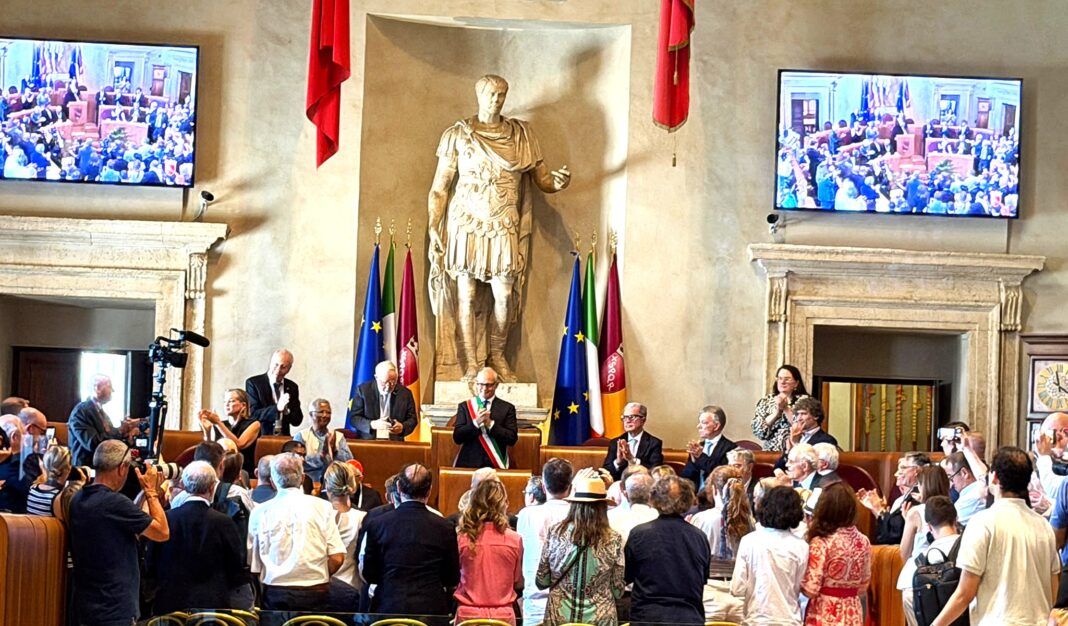
ROME (INPS Japan/London Post)— Nobel laureates, scientists, religious leaders, former heads of state, artificial intelligence researchers, corporate representatives and civil society leaders gathered on July 16 in the Giulio Cesare Hall of Rome’s City Hall, the Palazzo Senatorio, to sign the Rome Declaration for an Unarmed and Disarming Peace in the Age of Artificial Intelligence, Nuclear and Autonomous Weapons, New Digital Protocols and Emerging Models of Digital Development.
The declaration argues that, in an age when AI, nuclear weapons, autonomous weapons systems and rapidly evolving digital technologies are becoming increasingly interconnected, the ultimate decisions affecting humanity’s survival must remain firmly under human responsibility and control.|JAPANESE|
Its central message is encapsulated in a single sentence: “We must disarm the next arms race, both AI and nuclear, before they define the next century as well.”
The declaration was adopted as the principal outcome of the Global Nobel Laureates Assembly on Artificial Intelligence and Nuclear War, held from July 14 to 16 at Borgo Laudato Si’, within the papal summer residence at Castel Gandolfo outside Rome.
More than 200 participants from research institutions, international organisations, faith communities and civil society attended the gathering. Its discussions were grounded in the vision set out in Pope Leo XIV’s encyclical Magnifica Humanitas: placing the human person at the centre of scientific and technological development and building an “unarmed and disarming peace.”
Decisions of Life and Death Must Remain Human
At the signing ceremony, speakers issued a series of urgent warnings about the dangers posed by AI and nuclear weapons.

Cardinal Baldassare Reina, Vicar General of Rome, stressed that no machine, algorithm or autonomous system should ever be permitted to make decisions affecting humanity’s survival.
“Decisions concerning life and death, peace and war, and the future of peoples must remain under full, responsible and meaningful human control,” he said.
Actor Sharon Stone, who attended as a peace ambassador, declared that “human dignity is not an algorithm.” Rome Mayor Roberto Gualtieri delivered welcoming remarks on behalf of the host city.
This human-centred approach closely reflects the religious and ethical perspective emphasised by Yoshiyuki Nagaoka, Executive Director, Office of Public Affairs at Soka Gakkai, who participated in the assembly.
Nagaoka took part in the faith-based working group and interfaith dialogue. He said that, after two days of discussions among representatives of different religious traditions, the participants reached a unanimous understanding that human dignity is a universal value that every faith tradition can share and uphold.
“To broaden the call for the abolition of nuclear and autonomous weapons, faith communities must unite,” Nagaoka said. “Protecting human dignity is a vital key to achieving that goal.”
The “Insensitivity to Humanity” Behind Nuclear Weapons
The declaration calls on governments, corporations and international organisations to slow the race to develop frontier AI, halt the expansion of nuclear arsenals and advance negotiations toward the verifiable and irreversible elimination of nuclear weapons.
Nobel laureate in physics Professor David Gross warned that the world is now caught in an arms race more dangerous than the one it faced three decades ago. Expressing concern over the collapse of arms-control treaties and the proliferation of nuclear-armed states, he urged governments to adopt policies that reduce the risks of war and nuclear catastrophe.
Nagaoka stated unequivocally that abolishing nuclear weapons is “a fundamental obligation of humanity.”
“As Buddhists, we believe that nuclear weapons are rooted in an extreme insensitivity to humanity and a profound lack of responsibility toward humankind.”
Soka Gakkai intends to continue working with international organisations and civil society groups to promote the universalisation of the Treaty on the Prohibition of Nuclear Weapons, or TPNW. Nagaoka said that the ultimate objective remains the complete abolition of nuclear weapons and that the organisation’s conviction and determination have not changed.
He also argued that autonomous weapons and other emerging technologies raise ethical and moral questions similar to those posed by nuclear arms. Soka Gakkai is preparing a new statement addressing such technologies and weapons and is considering an international appeal calling on people who share these concerns to act in solidarity.
When a “Painless Civilisation” Conceals the Suffering of Others
AI has the potential to produce major benefits in medicine, education, environmental protection and scientific research. At the same time, it could accelerate military competition, amplify disinformation, obscure accountability in warfare and weaken human involvement in critical decisions.
Nagaoka explained that humanity’s original motivation for developing science and technology was to alleviate suffering, reduce laborious and time-consuming work and make life more comfortable.
Yet he warned that a civilisation concerned only with eliminating pain contains a serious and often overlooked danger.
“When civilisation moves toward what might be called a ‘painless civilisation’ and becomes preoccupied with avoiding its own suffering, people may also become insensitive to the pain of others. As a result, individuals become more isolated and divisions within humanity deepen.”
Nagaoka argued that this loss of sensitivity to the suffering of others lies at the root of the conditions that allow both AI-enabled weapons and nuclear arms to emerge.
The Rome Declaration does not reject technological innovation. Rather, it insists that technological development must be guided by human dignity and ethical responsibility.
Technology should be used to alleviate human suffering, not to divide people or become an instrument of destruction.
AI and Nuclear Weapons Can No Longer Be Separated
One of the assembly’s defining features was its decision to address AI and nuclear weapons not as separate policy fields, but as interconnected ethical and security challenges.
Both raise the same fundamental question: who should hold the ultimate authority to make decisions that could determine humanity’s survival?
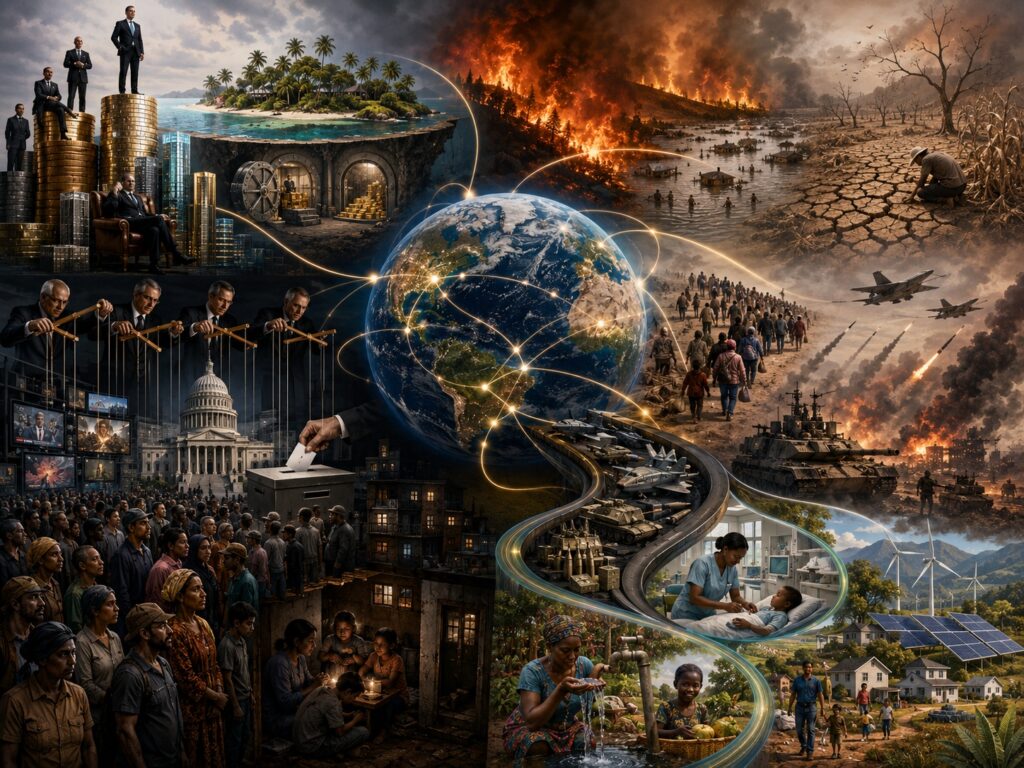
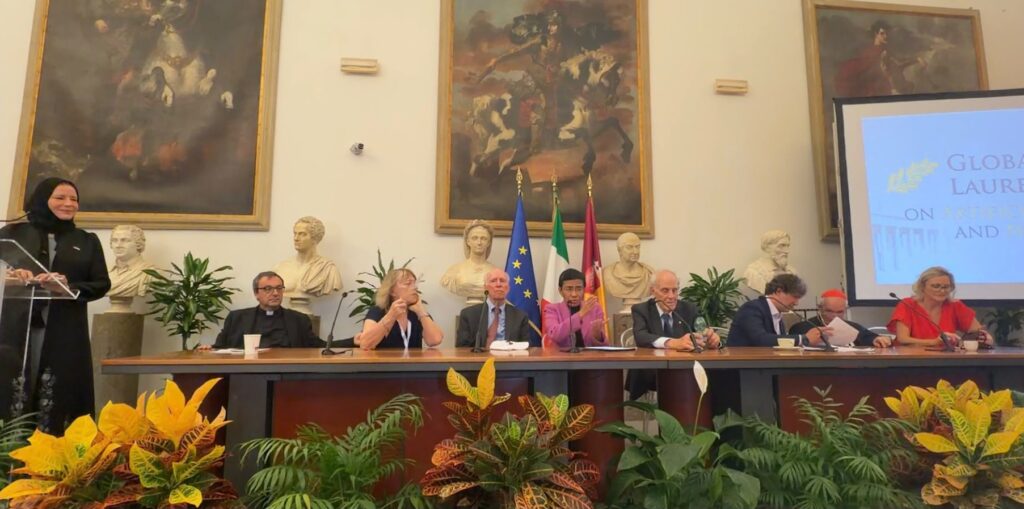
The fact that religious leaders, physicists, AI researchers, security specialists and policymakers gathered in the same forum underscored both the complexity and urgency of the issue.
Father Andrea Ciucci of the Pontifical Academy for Life observed that human ingenuity can create masterpieces or cause devastation, and that AI and nuclear technology are no exceptions.
Cardinal Silvano Maria Tomasi and Nobel Peace Prize laureate Maria Ressa emphasised that an ethical compass is indispensable in an era of rapid technological change and growing geopolitical instability.
Professor Daniel Holz of the University of Chicago acknowledged that the world faces unprecedented dangers, but maintained that practical means of making it safer remain available—provided governments choose cooperation over confrontation.
The Essence of Education Is Imagination
Addressing the younger generation, Nagaoka recalled the words of a Hiroshima hibakusha who told him that “the ultimate essence of peace education is imagination.”
Imagination, he said, is not merely the ability to form mental pictures. It is the sensitivity required to experience the pain of others as though it were one’s own.
“How can we receive the suffering of others as our own suffering? That process depends on education.”
The education Nagaoka describes is not confined to schools. He places greater emphasis on mutual learning than on one-way teaching.
The person sharing information and the person receiving it should learn from one another, deepen their understanding and develop their respective philosophies. That reciprocal process, he said, is the true value of education for peace.
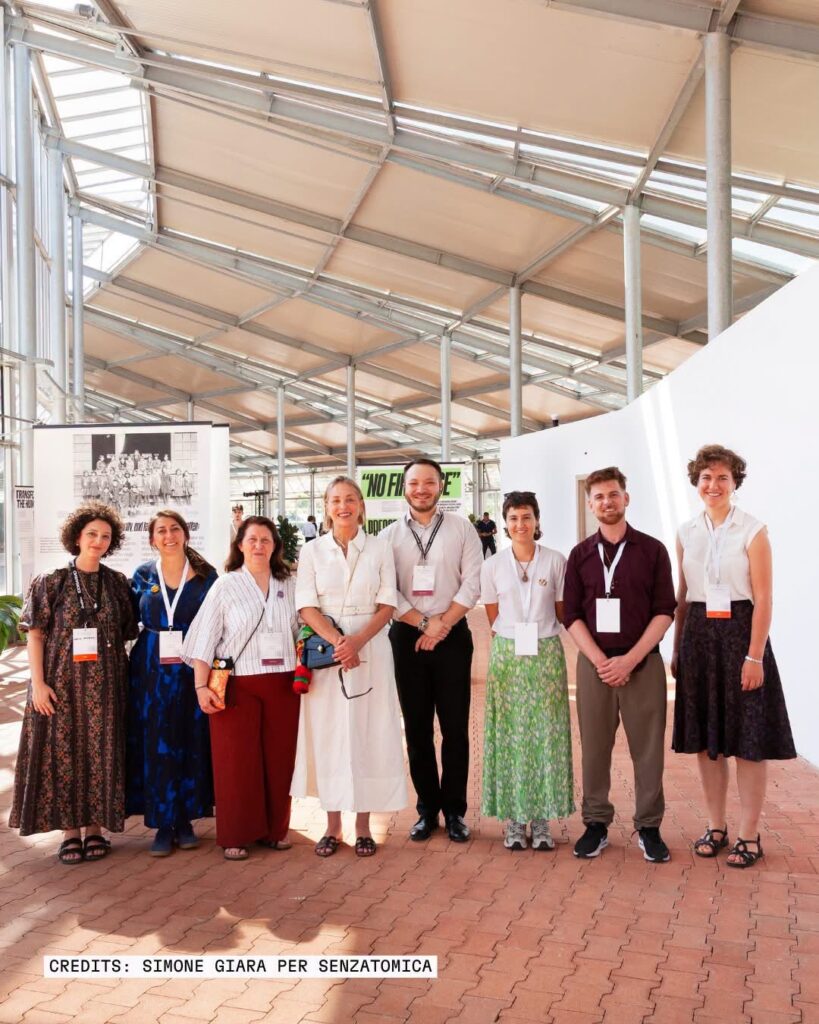
The assembly also highlighted the work of Senzatomica, an Italian youth-led movement for nuclear abolition. Nagaoka expressed his hope that this initiative, launched by younger generations, would expand internationally.
“By sharing the same concerns and deepening our understanding of the common human pathology underlying nuclear and AI-enabled weapons, we can broaden human solidarity. That united humanity will be our strongest weapon against the nuclear threat.”
Responsibility Extends Beyond Governments to Corporations
The Rome Declaration calls not only on governments but also on corporations to act responsibly.
Much of the world’s most advanced AI research is now being conducted by multinational technology companies. Effective AI governance will therefore require cooperation between states and private industry.
The declaration, however, will not immediately transform geopolitical realities.
Nuclear-armed states continue to modernise their arsenals, while different and sometimes competing regulatory models for AI coexist across countries and regions.
Although the declaration establishes ambitious ethical principles, concrete institutional arrangements will be needed to reconcile national security interests with limits on AI development. Moral persuasion alone will not be sufficient to persuade governments to restrain technological competition; political, economic and diplomatic incentives will also be required.
The Role of Civil Society and the Media
Nagaoka emphasised that the media has an indispensable role in rebuilding momentum for nuclear abolition.
In addition to reporting the political and economic dimensions of nuclear weapons and AI, the media must also illuminate the moral and ethical questions they raise.
“The media can play an enormously important role in encouraging ordinary people and bringing their power into this process through civil society.”
Civil society likewise bears responsibility for protecting human dignity and advancing a world free of nuclear weapons through education and dialogue.
History shows that many international norms began as moral appeals before gradually influencing diplomacy, treaties and international law.
The Rome Declaration may not immediately alter the strategic calculations of the world’s major powers. Nevertheless, its significance lies in reframing AI and nuclear weapons within the broader context of human dignity, ethics and the future of civilisation.
Science and technology alone cannot determine humanity’s future. Technological progress without ethical responsibility may produce not unprecedented prosperity, but unprecedented danger.
Who Will Decide Humanity’s Future?

At a time when governments are accelerating investment in AI while simultaneously modernising their nuclear arsenals, the warning issued from Rome carries exceptional urgency.
The Rome Declaration may not immediately change the security policies of major powers.
But it has placed an unavoidable question before the world’s leaders:
In an age increasingly shaped by algorithms and autonomous systems, who should ultimately decide humanity’s future?
The answer offered by the Rome Declaration is clear:
Technology should amplify human wisdom, not replace humanity.
And as Nagaoka stressed, the power to turn that principle into reality does not belong to governments and scientists alone.
Faith communities, civil society, the media, educators and younger generations must unite around the shared value of human dignity. That “united humanity” is the most powerful force available to confront both nuclear weapons and the threat of AI escaping meaningful human control.
This article is brought to you by London Post in collaboration with INPS Japan and Soka Gakkai International, in consultative status with the UN’s Economic and Social Council (ECOSOC).

INPS Japan