

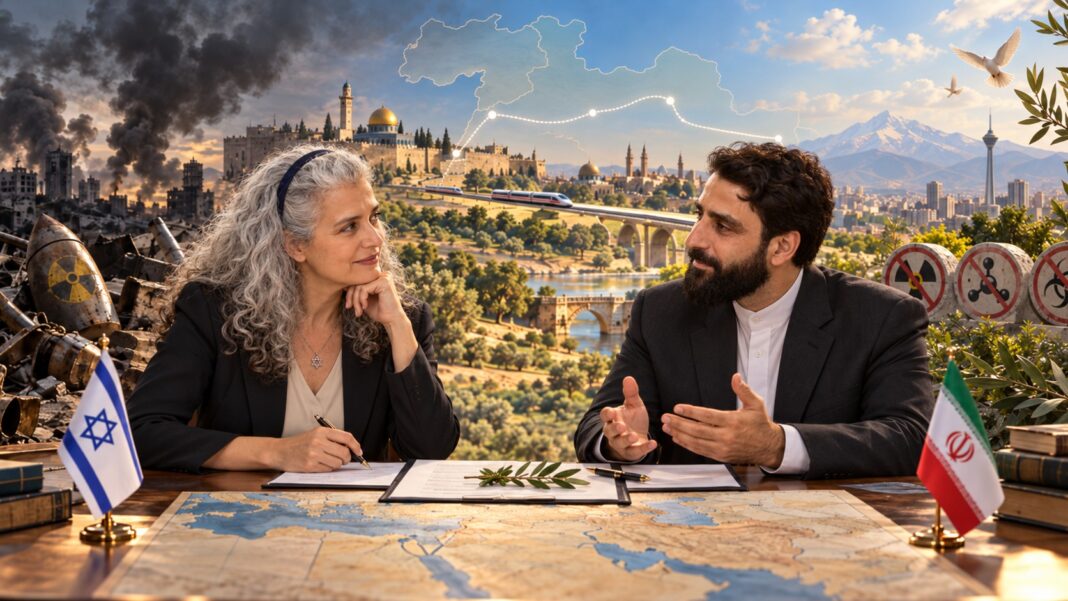

The Middle East Treaty Organization (METO) shares an out-of-the-box Israeli-Iranian Vision for a weapon of mass destruction free region.
By Roman Yanushevsky
Paris/Jerusalem (INPS Japan) – For decades, the idea of a Middle East free of nuclear, chemical and biological weapons has remained one of the region’s most difficult diplomatic challenges. The Middle East Treaty Organization (METO), a civil-society initiative that grew into a registered organization, is trying to turn that idea into a practical negotiating framework.
METO’s stated goal is a Middle East free of all weapons of mass destruction, with regional security and peace as the broader objective. The organization has developed an evolving draft treaty covering nuclear, chemical and biological weapons and presents it not as a finished agreement, but as a possible blueprint for governments.
Among the people who helped build METO are Israeli peace and disarmament activist Sharon Dolev and Iranian conflict-resolution specialist Emad Kiyaei. Dolev has worked on nuclear disarmament in Israel since 2007 and is METO’s founder and executive director; Kiyaei is one of the organization’s directors and has worked for years on diplomacy, conflict resolution and the Iranian nuclear issue.
Their story is also an attempt to answer a more basic question: can Israelis and Iranians work together on the very issue that has placed their countries on opposite sides of the region’s most dangerous confrontation?
“We are sitting on a ticking bomb”
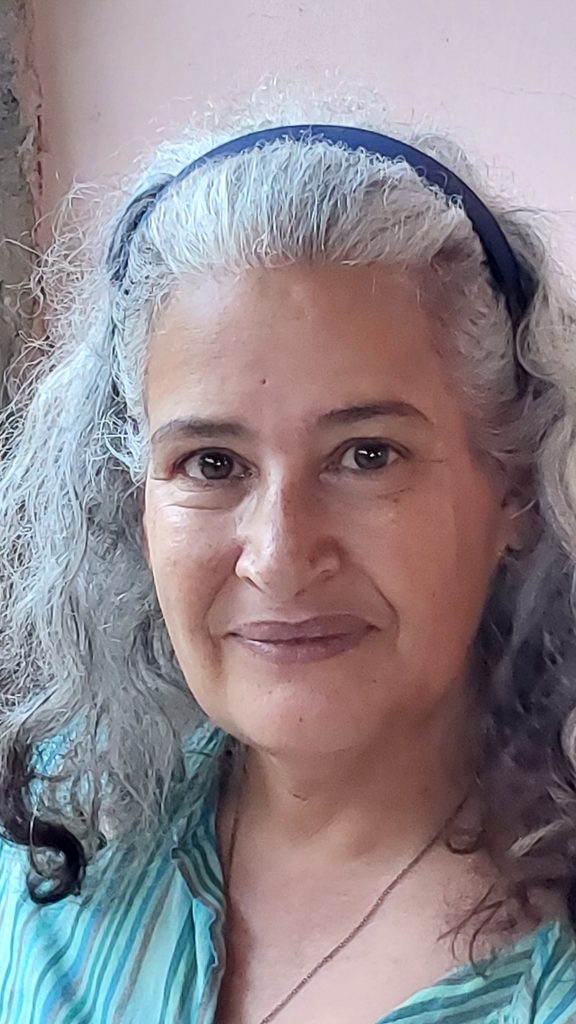
For Dolev, the nuclear issue was present long before she began campaigning on it. She grew up in Arad, not far from Dimona, in an Israel where nuclear weapons were widely understood to exist but rarely discussed openly.
“I grew up with the secret,” she recalls. “You don’t think, you don’t speak.” In 2007 she began working on nuclear disarmament with Greenpeace International. When the organization later closed its global campaign, she decided to continue on her own.
The more she worked on the issue, the more convinced she became that nuclear disarmament could not be separated from regional security. “Even if I can convince lots of Israelis that a world without nuclear weapons is something that they want, there is no safe way for Israelis to believe that they can get rid of nuclear weapons without a regional solution,” she says.
For Dolev, the central problem was not a lack of declarations. Arab states, Iran and Israel have all, in different ways, referred to the idea of a Middle East free of weapons of mass destruction. What was missing, she argues, was a practical model that could make participation possible.
Her conclusion was simple: instead of endlessly describing why the zone was impossible, someone had to try to design one.
An Iranian perspective
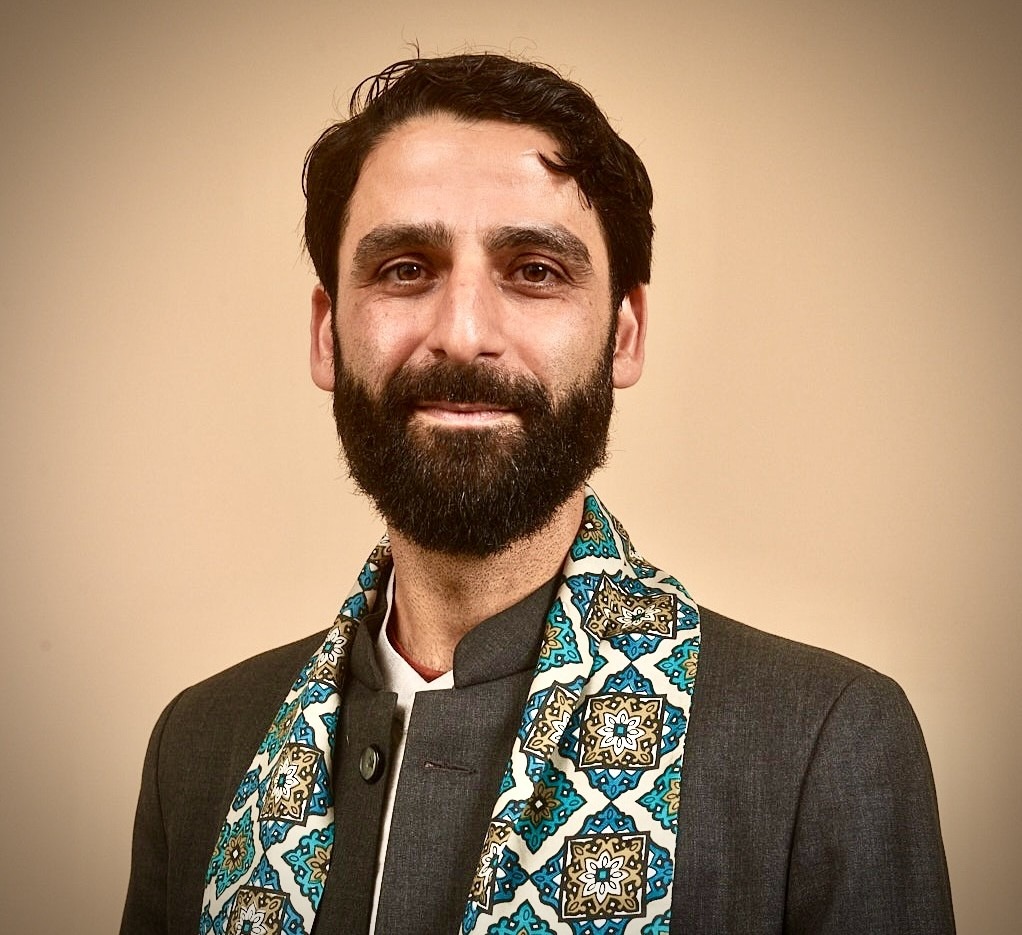
Kiyaei approached the issue from a very different direction. As an Iranian working in conflict resolution, international relations and diplomacy, he had followed the nuclear dispute between Iran and the West for years. To him, the nuclear question was part of a much larger failure of communication between Iran and the United States and, more broadly, of the region’s diplomatic architecture.
“One of them is war. The other is diplomacy,” Kiyaei says. “So how can we take diplomatic approaches, but back it up with technically sound solutions that are politically viable?”
His work brought him into contact with nuclear physicists, engineers, policymakers and diplomats. He became involved in efforts to develop mechanisms capable of demonstrating that Iran’s nuclear program could remain peaceful under comprehensive international monitoring.
That experience convinced him that the same logic could be applied beyond Iran. If international mechanisms could verify that one country’s nuclear activities remained peaceful, why not develop a regional system covering every state?
The question eventually became much broader: what would happen if the entire Middle East were subjected to a common system of non-proliferation, verification and disarmament?
The Israeli and the Iranian
Dolev and Kiyaei first encountered each other at the United Nations. Kiyaei had heard that an Israeli was publicly talking about nuclear weapons. His reaction was disbelief. “The chutzpah and the audacity of an Israeli to talk about nuclear weapons,” he recalls thinking. He went to hear her speak, expecting to challenge her.
Instead, he discovered that they were arguing for many of the same things. Their relationship developed beyond formal meetings. At one point, Dolev was going through a severe personal crisis. Her father had died after a long illness, and shortly afterward her partner left her. She nevertheless traveled to the UN to continue presenting the draft treaty.
Kiyaei saw that something was wrong and suggested they talk privately. They ended up discussing their families and personal lives rather than Iran, Israel or nuclear weapons. Dolev later described the encounter as the moment when they became “brother and sister.”
For Kiyaei, that human connection became central to METO’s philosophy. “When people say to us, is it possible for Israelis, Iranians, Arabs, Palestinians, whoever, to be able to work together to create this future? We say that, of course it is,” he says. The starting point, in his view, is seeing the person before the nationality, political identity or historical conflict.
From “impossible” to a draft treaty
When Dolev began working on the first draft, she says diplomats and experts repeatedly told her that such a treaty could not be done. There was no existing regional model covering nuclear, chemical and biological weapons. The states involved were also deeply divided and, in many cases, did not even maintain normal relations.
“So writing the first draft was not even something that I thought would work,” Dolev recalls. It was initially an exercise to identify the technical obstacles and distinguish them from the political problem of mistrust.
The draft nevertheless began circulating among foreign ministries in the region. According to Dolev, reactions surprised the activists. The document was not treated simply as an impossible fantasy; instead, it became something diplomats could criticize, amend and negotiate.
That was precisely the point.
The draft evolved through several versions. METO itself describes the text as a living document that changes through consultations with experts and diplomats rather than a treaty that governments are expected simply to adopt.
“We just had to imagine that the states actually mean what they say that they want to achieve,” Dolev says. Once the question changed from “Is this possible?” to “How could this work?”, the conversation itself began to change.
The real objective is bigger than disarmament
For METO, a WMD-free zone is not supposed to be the end of the process. The organization sees negotiations over nuclear, chemical and biological weapons as one of the few subjects that can bring countries with profoundly different interests into the same room. The process itself can create communication, confidence and habits of cooperation.
“The process is paramount, because that builds trust, that builds bridges,” Kiyaei says.
That is why METO’s work goes beyond the draft treaty. Its activities include diplomacy, education, public outreach, research and cooperation with other civil-society organizations. The larger vision is strikingly ambitious: a Middle East where regional cooperation becomes normal rather than exceptional.
“We need to go crazy on love”
The wars of recent years have not convinced Dolev and Kiyaei to abandon their approach. Quite the opposite. They argue that violence has demonstrated the limits of military solutions while simultaneously making trust between societies even harder to build. That creates a paradox: the need for regional cooperation becomes greater precisely when cooperation becomes more difficult.
“We need to go extreme on the other side,” Kiyaei says. “If we have extremists that are advocating for violence and destruction and wars… we need to go the other extreme.”
For him, that means compassion, communication and the deliberate refusal to reduce entire peoples to the actions of their governments. “It’s much easier for me to hate my enemy,” he says. “So we need to actually fight that.” The deeper the region sinks into hatred, he argues, the more deliberately people need to resist it.
Has war made the case stronger?
Dolev’s answer is uncomfortable: both yes and no. The need for a regional security mechanism has become more obvious, she argues, but so has the lack of trust. Military confrontation may increase the perceived need for diplomacy while simultaneously making diplomacy harder.
She also believes that repeated attacks have demonstrated a fundamental limitation of military power: “They realized that they cannot stop Iran’s nuclear program with military power.” In her view, this creates an opening for people to consider alternatives that previously seemed politically unrealistic.
Kiyaei goes further. One of the lessons of the post-October 7 period, he argues, is that one country’s security cannot ultimately be built on the permanent insecurity of its neighbors. “The inability to achieve peace through military force… You need an alternative way forward. Beyond violence,” he says.
He sees regional security arrangements as increasingly important because the Middle East’s conflicts are no longer neatly bilateral. A war involving Iran, Israel, the United States or other countries rapidly produces consequences across the entire region.
Bringing Israel into the room
METO’s most difficult challenge remains Israel’s participation. Dolev argues that the diplomatic language around a WMD-free zone has changed. Instead of simply demanding that Israel take unilateral steps, the discussion can focus on designing a system in which Israel could eventually participate while addressing its security concerns.
“The biggest change did not come from our governments yet,” she says. “The biggest change came from diplomats.”
The objective now is not merely to tell Israel that it must join. It is to create a framework that Israel could realistically enter. For Dolev, that means convincing Israeli policymakers that the regional process is not a threat to Israeli security but potentially part of a long-term security architecture.
A road from Jerusalem to Tehran
The ultimate METO vision goes well beyond nuclear weapons. Kiyaei imagines a region where today’s borders and political divisions no longer prevent people from traveling, trading and cooperating. Dolev has a similar image: a train crossing the Middle East, making it possible to have breakfast in Jerusalem, lunch in Damascus or Beirut and dinner in Tehran.
It sounds utopian. They insist it is not.
Their argument is that Europe once appeared trapped in an equally permanent cycle of wars. The European Union did not emerge because centuries of conflict suddenly disappeared, but because political leaders eventually created institutions designed to make another cycle of war less likely.
“We’re not that different,” Kiyaei says. “And we can do it too.”
This article is brought to you by INPS Japan in collaboration with Soka Gakkai International in consultative status with UN ECOSOC.

INPS Japan