


IAEA’s 70th General Conference highlights growing strains on safeguards and nuclear security as attention shifts to the first review of the Nuclear Weapons Ban Treaty
By Katsuhiro Asagiri
VIENNA (INPS Japan) — The international nuclear order is facing another test as governments move from an inconclusive review of the Nuclear Non-Proliferation Treaty (NPT) in New York to renewed disputes over safeguards and nuclear security in Vienna—and toward the first Review Conference of the Treaty on the Prohibition of Nuclear Weapons (TPNW) later this year.|JAPANESE|
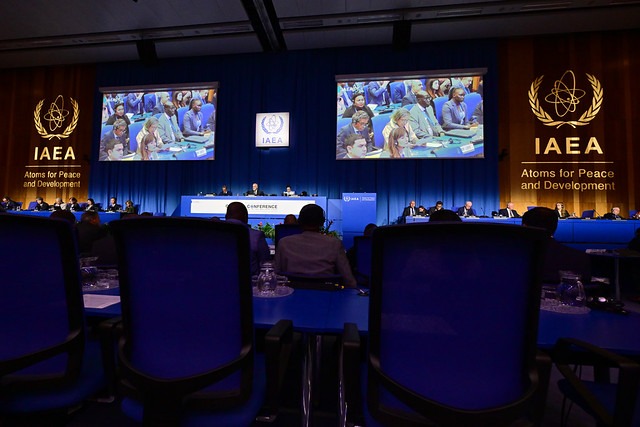
The 70th General Conference of the International Atomic Energy Agency (IAEA), held in Vienna from September 14 to 18, came less than four months after the 11th NPT Review Conference ended without consensus on a substantive outcome.
It was the third consecutive NPT Review Conference, following those in 2015 and 2022, to conclude without agreement on substantive conclusions and recommendations—underscoring the growing difficulty of reaching consensus amid heightened nuclear risks and geopolitical tensions.
UN Secretary-General António Guterres expressed disappointment at the outcome while reaffirming the NPT as a cornerstone of the global nuclear disarmament and non-proliferation regime.
The IAEA does not negotiate nuclear disarmament. Its responsibilities include promoting the peaceful uses of nuclear energy and applying safeguards to verify that nuclear material is not diverted to nuclear weapons or other nuclear explosive devices.
Yet the issues confronting the Agency—from Iran and North Korea to Ukraine and naval nuclear propulsion—show how safeguards, nuclear security and armed conflict are increasingly intertwined with wider questions about the future of the international nuclear order.
Iran Puts Verification Under Pressure
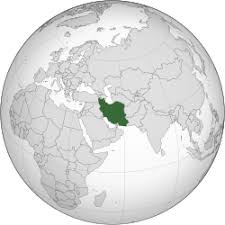
Iran remains one of the most difficult issues facing the Agency.
For the IAEA, the central question is not simply the political dispute surrounding Iran’s nuclear programme, but whether it can maintain the continuity and credibility of independent verification.
Restrictions on access and uncertainty surrounding nuclear material, including highly enriched uranium, have intensified concerns about the effectiveness of safeguards.
The issue has taken on an additional dimension following attacks on Iranian nuclear facilities. Beyond competing political and military claims lies a wider question for the international community: how can nuclear facilities—and the verification system surrounding them—be protected during armed conflict?
Ukraine Tests Nuclear Safety in Wartime
Ukraine presents another challenge.
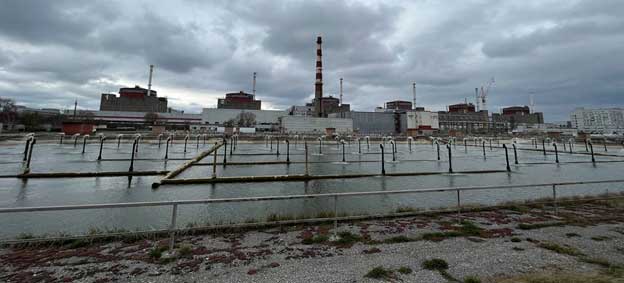
The war has placed major nuclear facilities in or near areas of military operations, with the Zaporizhzhia Nuclear Power Plant remaining at the centre of international concern.
The IAEA has maintained experts at the site as part of efforts to reduce risks to nuclear safety and security.
Russia and Ukraine have repeatedly accused each other of actions threatening nuclear installations. While those claims remain contested, the underlying issue extends beyond this war: international nuclear governance mechanisms must now operate in circumstances where a major nuclear facility can be exposed to prolonged armed conflict.
North Korea and the Limits of Verification
North Korea remains another major test of the non-proliferation regime.
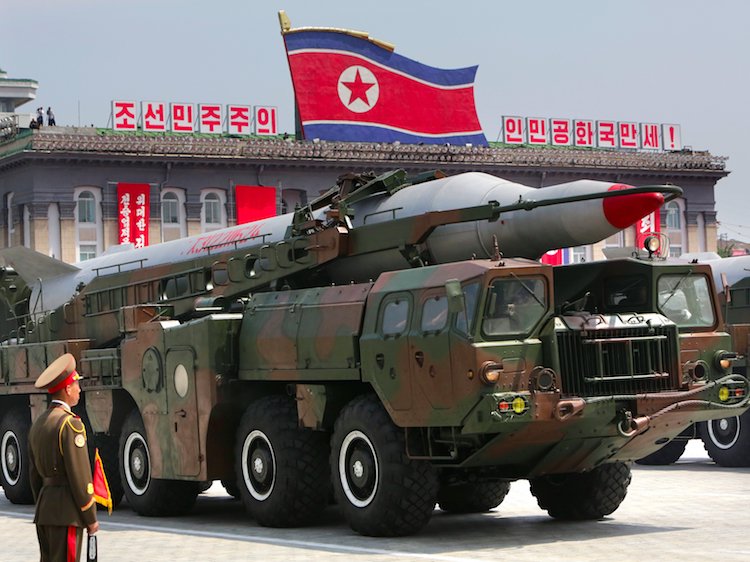
The IAEA continues to monitor developments in the Democratic People’s Republic of Korea from outside the country and maintains its readiness to resume verification activities should political circumstances permit.
The case illustrates a fundamental limitation of international verification: even sophisticated monitoring institutions ultimately depend on access and cooperation.
More broadly, the Vienna conference reflected the growing difficulty of achieving consensus. Political divisions are increasingly affecting debates even within an institution whose work is largely technical, encompassing safeguards, nuclear safety and security, and peaceful nuclear applications.
At the same time, progress in other safeguards cases shows that multilateral verification can produce results when governments provide access, transparency and sustained cooperation.
Civil Society Bridges the NPT and TPNW
The debate over the future of nuclear disarmament is not confined to governments.
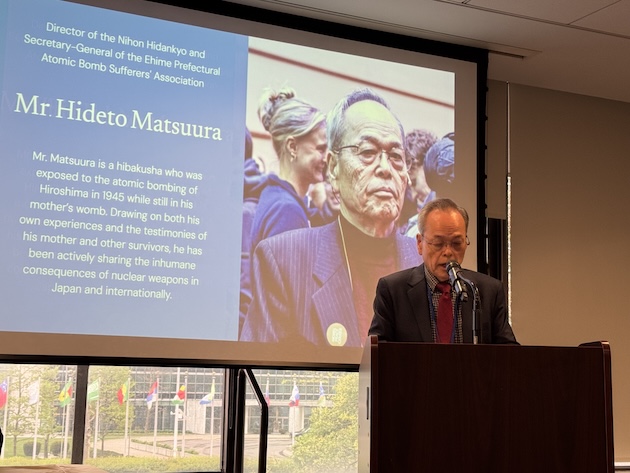
At the 2026 NPT Review Conference, Soka Gakkai International (SGI) was among civil society organizations advocating nuclear disarmament education, nuclear risk reduction and greater attention to the humanitarian and environmental consequences of nuclear weapons.
On April 30, SGI and the Nuclear Age Peace Foundation co-organized a side event examining extended nuclear deterrence through the lens of the humanitarian impact of nuclear weapons.
Hideto Matsuura, an atomic bomb survivor representing Nihon Hidankyo, described how radiation-related illnesses continue to affect Hibakusha more than eight decades after the atomic bombings.
The discussion raised a question that lies at the heart of the continuing debate over nuclear deterrence: whether security should be viewed primarily from the standpoint of states or also through the lens of human security.
Such civil society engagement provides a link between the NPT process and the humanitarian approach that contributed to the emergence of the TPNW.
From Vienna to New York
The next major stage of the 2026 nuclear diplomacy cycle now moves back to New York.
From November 30 to December 4, states parties to the TPNW will hold the treaty’s first Review Conference at United Nations Headquarters.

The TPNW does not replace either the NPT or the IAEA.
The NPT combines three pillars—nuclear non-proliferation, nuclear disarmament and the peaceful uses of nuclear energy—while the IAEA provides much of the safeguards and verification machinery supporting the non-proliferation regime.
The TPNW approaches the nuclear question from a different direction. It prohibits activities including the development, testing, production, possession, use and threat of use of nuclear weapons and establishes a legal framework aimed at their elimination.
The three frameworks therefore address distinct but interconnected dimensions of the nuclear order.
The 2026 NPT Review Conference demonstrated the difficulty of reaching political agreement on disarmament and non-proliferation. Vienna, meanwhile, highlighted the practical challenges confronting verification and nuclear security amid armed conflict, regional proliferation disputes and geopolitical divisions.
The first TPNW Review Conference will now examine what the prohibition treaty can contribute under these conditions.
Nuclear-armed states remain outside the TPNW, placing clear limits on what the treaty can achieve on its own. At the same time, its states parties and supporting civil society organizations have placed the humanitarian consequences of nuclear weapons and their elimination at the centre of international debate.
When delegates gather in New York on November 30, the discussion will therefore extend beyond the implementation of a single treaty.
After another NPT Review Conference ended without substantive consensus, a broader question remains: how can established and newer multilateral frameworks work alongside one another to reduce nuclear risks, strengthen verification and advance nuclear disarmament?
From Vienna to New York, that question is set to remain at the centre of nuclear diplomacy in 2026.
This article is brought to you by INPS Japan in collaboration with Soka Gakkai International in consultative status with UN ECOSOC.

INPS Japan