




Human Dignity and the “Rome Process” in the Age of AI and Nuclear Weapons
By Katsuhiro Asagiri
ROME(INPS Japan)- Humanity now possesses two forces of immense power.
One is nuclear weapons, capable of wiping out cities in an instant and potentially destroying civilization itself. The other is artificial intelligence, which is rapidly transforming society, the economy, warfare, education, healthcare, the information environment and even human decision-making.|JAPANESE|
Although different in nature, the two share a critical feature: both are products of science and technology that, if misused, could cause harm on a scale beyond human control.

The dangers of nuclear weapons are visible in the form of blast, radiation, long-term environmental devastation and potentially catastrophic effects on the global climate. The dangers posed by AI, by contrast, can seep more quietly into society—through disinformation, surveillance, discriminatory algorithms, autonomous weapons, military miscalculation and the gradual erosion of human judgment.
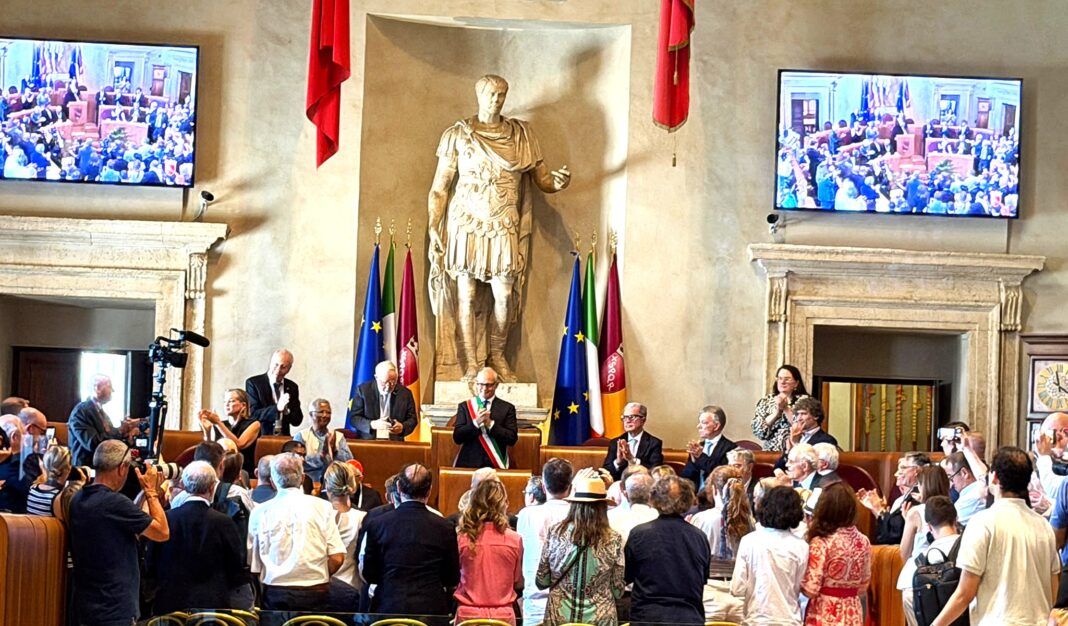
It was precisely to address these two civilizational risks within a single framework—and to define them as a shared ethical challenge for humanity—that the Global Nobel Laureates Assembly on Artificial Intelligence and Nuclear War was convened in Rome and Castel Gandolfo from July 14 to 16.
The gathering brought together Nobel laureates, former heads of state, scientists, AI researchers, nuclear-disarmament specialists, religious leaders, civil society representatives, young people and journalists.
On July 14 and 15, the discussions took place at Borgo Laudato Si’, within the papal estate at Castel Gandolfo. The final day featured a public ceremony and press conference on Rome’s Capitoline Hill, where the city government is headquartered. (Video Clip on the 1st Day) (Video Clip on the 2nd Day)
On the final day, participants adopted the Rome Declaration for an Unarmed and Disarming Peace in the Age of Artificial Intelligence, Nuclear and Autonomous Weapons, New Digital Protocols and New Models of Digital Development. (Video Clip on the Last Day)
It also brings AI and nuclear weapons together not merely as separate policy fields, but as manifestations of a single ethical question: Who should ultimately determine humanity’s future?
Yet the significance of the Rome Declaration lies not only in the text that was adopted.
The more demanding task is to embed its principles in education, science, civil society, religion, business, the media and international institutions. In this article, I refer to that continuing undertaking as the “Rome Process.”
This is neither an official term used by the Assembly nor an established diplomatic concept. It is an analytical framework proposed by the author to describe the effort to connect AI governance, nuclear disarmament, scientific responsibility, religious ethics, civil society action, youth participation and public-interest journalism within one continuing international process.
What Is Technically Possible—and What Humanity Should Permit

Artificial intelligence and nuclear weapons are already beginning to intersect.
AI is increasingly being used to analyse satellite imagery, detect missiles, identify targets, strengthen cyber defences, track submarines, collect intelligence and support battlefield decision-making. The more military systems prioritise speed, the less time human beings have for reflection.
In a nuclear crisis, that danger becomes especially acute.
The history of nuclear weapons includes repeated episodes in which false alarms, technical failures, communications breakdowns, the misidentification of training data and political misunderstandings brought the world dangerously close to nuclear war. Catastrophe was avoided, in part, because human beings questioned the warnings, interrupted automatic procedures and delayed judgment.
Would the same restraint prevail if AI were entrusted with part of that decision-making process?
AI is fast. But speed is not wisdom. It can analyse vast quantities of data, but it cannot accept responsibility for the conclusions it produces. It can calculate probabilities, but it cannot comprehend the moral gravity of a decision to launch—or not to launch—a nuclear weapon.
Participants repeatedly warned of the dangers of integrating AI into nuclear command, control and communications systems. Of particular concern was the possibility that excessive confidence in AI could reduce human verification to a formality and accelerate decisions during a crisis.
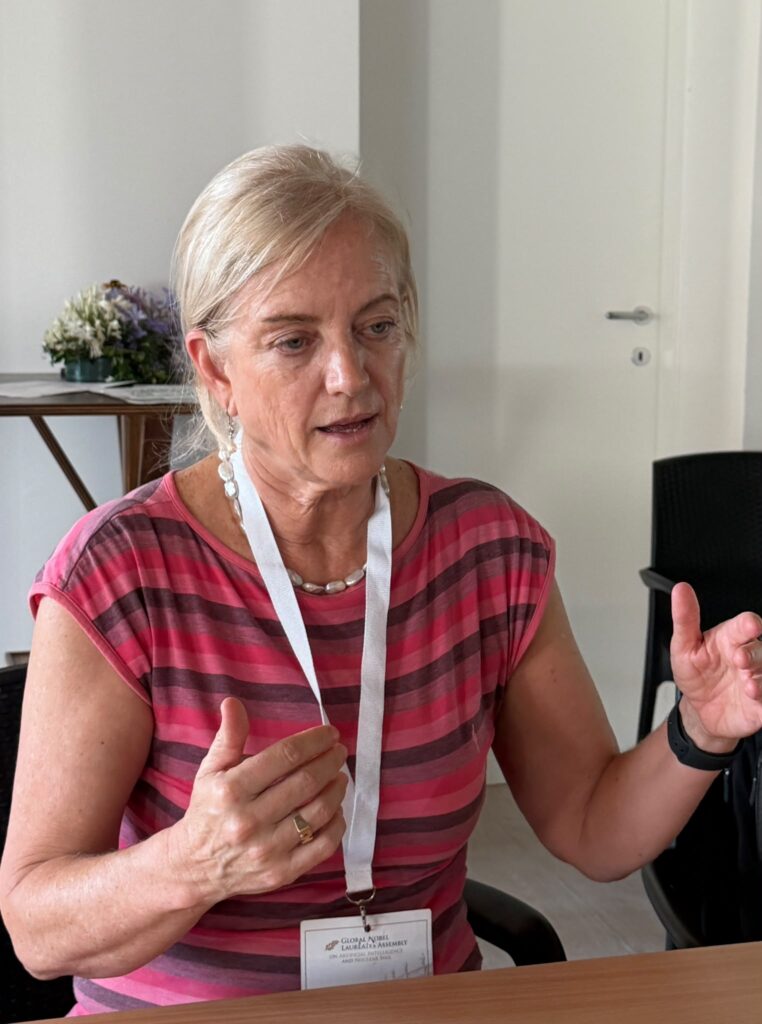
Physicist Karen Hallberg, Secretary-General of the Pugwash Conferences on Science and World Affairs, emphasised that science and technology should not themselves be treated as enemies. Scientists, however, must accept responsibility for the social consequences of their work.
Scientific discovery expands human knowledge. Yet scientists cannot disregard the possibility that their work may be used for weapons, surveillance, oppression or discrimination.
AI researchers now stand at a similar crossroads.
What is technically possible is not necessarily what human society should permit. The governance of AI cannot be left to engineers alone. Nor can it be entrusted solely to politicians or military experts.
What is required is an approach that crosses the boundaries of science, ethics, law, religion, civil society, education and the media.
The Ethical Shift Proposed by the Rome Declaration
At the heart of the Rome Declaration lies a fundamental shift from technology-centred security to human-centred security.
Traditional military policy has measured national security in terms of weapons capabilities, deterrence, information superiority and the speed of decision-making. Yet in an age of increasingly sophisticated weaponry and AI-accelerated warfare, that very approach risks undermining the security of humanity as a whole.
When one country strengthens its arsenal in pursuit of security, others respond in kind. When one side deploys AI for military purposes, its rivals follow suit. The result is a world in which every country may become technologically more powerful, even as the international system grows ever more unstable.
In response to this security paradox, the Rome Declaration calls for human dignity, international law, dialogue, disarmament and ethical responsibility to be placed at the centre of security policy.
Its essential message goes far beyond simply “regulating dangerous AI.” It affirms that machines must never be entrusted with the authority to decide matters of human life and death; that the use of weapons of mass destruction, including nuclear weapons, must never be legitimised; that science and technology must serve the common good; and that peace must be built not through a balance of military power, but through trust and cooperation.
This is therefore both a declaration on technology policy and a statement about the direction of human civilisation.
The Rome Declaration poses a fundamental question to humanity: Do we want machines that can make decisions faster, or do we seek to build human societies capable of making wiser decisions?
Who Is AI For?

The Assembly addressed not only the military uses of AI, but also its wider effects on society and the economy.
One of the central figures in those discussions was Muhammad Yunus, the 2006 Nobel Peace Prize laureate and founder of Grameen Bank.
Yunus has long argued that the economy exists to serve human beings. His message in Rome was consistent with that philosophy. The question is not whether AI should simply be accepted or rejected.
The real question is: For whose benefit is AI being designed, and who will receive its rewards?
The current AI race is being driven by enormous investments from powerful states and technology corporations. Yet if the gains from higher productivity are concentrated among a small number of companies and investors, technological innovation may widen inequality rather than reduce it.
A society in which workers lose their livelihoods through automation while the owners of technology accumulate ever greater wealth cannot credibly be described as a model of human-centred development.
AI must exist to serve humanity.
That principle resonates deeply with the Rome Declaration’s emphasis on human dignity.
AI governance is not merely a form of risk management designed to prevent accidents. It is also connected to the vision of the Sustainable Development Goals: building a society in which no one is left behind.
When Human Beings Lose the Capacity to Think

Maria Ressa, the Nobel Peace Prize-winning Filipino journalist, warned that one of the greatest dangers of the AI age is that human beings may lose the capacity to think for themselves.
AI can process vast quantities of information almost instantaneously. But it is not a moral agent capable of deciding whether information is true or whether its social consequences are just.
Text, images, video and audio generated by AI are becoming increasingly sophisticated, making it ever more difficult for citizens to distinguish fact from fabrication.
Democracy can function only when citizens are able to share at least a basic foundation of common facts. When that foundation collapses, dialogue and consensus-building become impossible.
AI can provide information on which decisions may be based. It cannot determine what is right or wrong. It can present options. It cannot accept responsibility for their consequences.
In this context, “human control” must mean more than a human being formally pressing the final button.
It must be substantive and meaningful control: human beings must understand the significance of the decision, retain the ability to challenge it and remain accountable for its consequences.
The True Meaning of the Rome Declaration Revealed at the Press Conference
At the final press conference, speakers once again explained the significance of the Rome Declaration. What was particularly striking was that none of them suggested that the declaration alone would transform the world. Instead, they repeatedly emphasized the importance of continuing the dialogue from this point forward.
The Rome Declaration is not legally binding. It does not impose obligations on governments, nor does it possess the authority to directly regulate AI companies. Nevertheless, the speakers stressed that the very fact that scientists, policymakers, religious leaders, civil society representatives and young people had affirmed a shared ethical foundation carried profound significance.
This approach echoes the historical experience of the 1955 Russell–Einstein Manifesto, which did not immediately achieve nuclear disarmament but became the starting point for the Pugwash Conferences and subsequent international dialogue on nuclear risks.
The Rome Declaration, too, should not be viewed as a one-time document, but rather as the beginning of a continuing process of international cooperation.

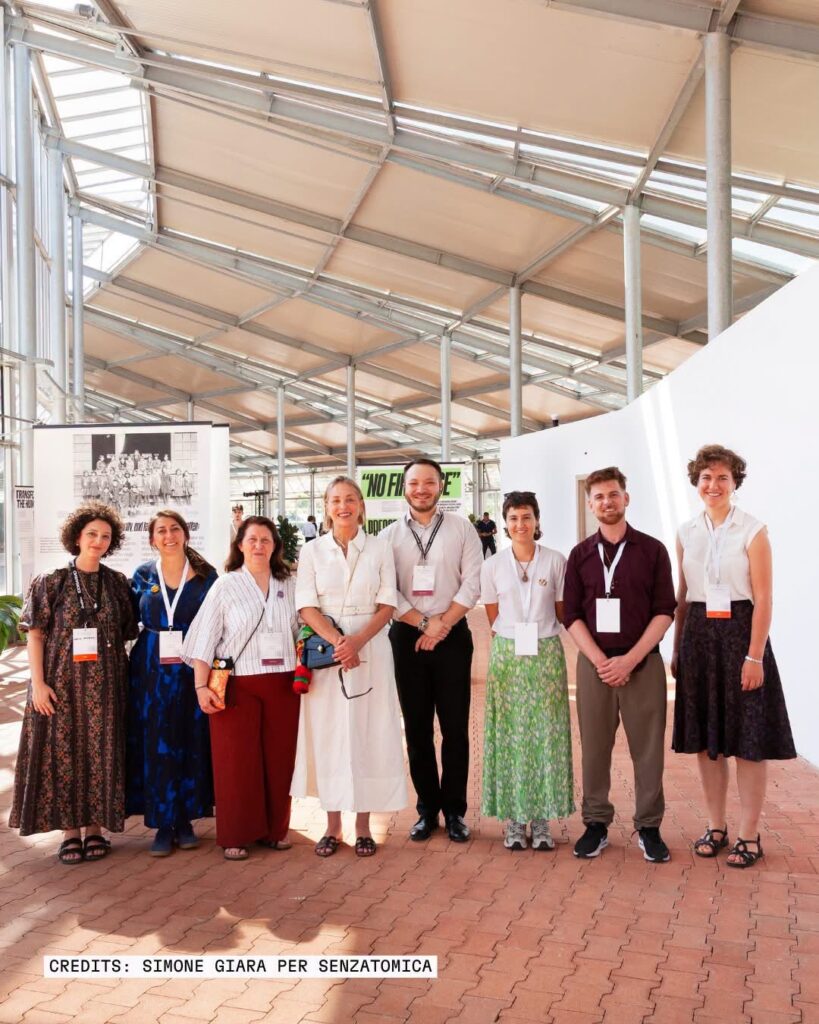
At Borgo Laudato Si’, the venue of the Assembly, many representatives of Senzatomica, Italy’s nuclear-disarmament and peace-education initiative, also participated. The project has long worked to translate the ideals of a world free of nuclear weapons into concrete civic action.
Through exhibitions, dialogue programmes and educational activities, Senzatomica has sought for many years to communicate the importance of nuclear abolition to younger generations. During the Rome Assembly, it again played an important role in connecting not only experts but also citizens and young people with the broader discussions on humanity’s future.
Whether the Rome Declaration takes root in society will not be determined by intergovernmental diplomacy alone. The continued engagement and practical efforts of civil society are essential to sustaining and giving life to its principles.
The Meaning of Dōku in the AI Age
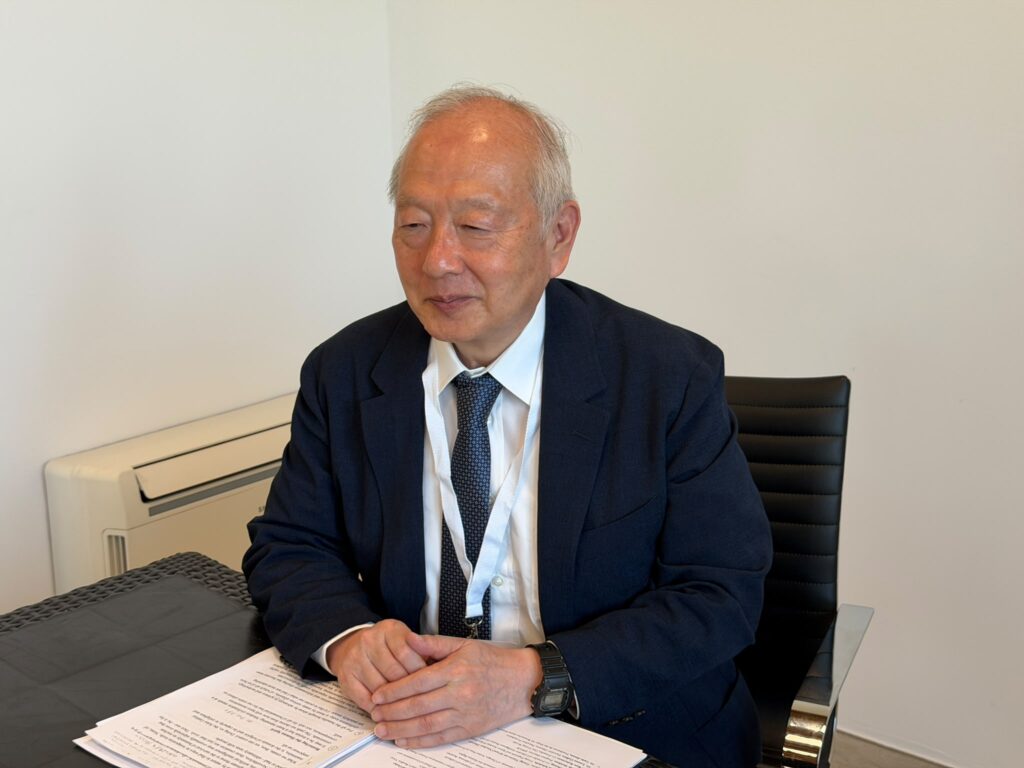
Among the most thought-provoking contributions at the Assembly were the remarks of Yoshiyuki Nagaoka, Director of External Affairs at Soka Gakkai
Nagaoka argued that AI should be understood not merely as a technological or regulatory issue, but as an opportunity to reconsider the fundamental question of what it means to be human.
AI is a mirror reflecting humanity.
Whether it brings happiness or destruction will be determined not by AI itself, but by the values of the people who design, operate and use it.
“The problem is not AI,” Nagaoka said. “Ultimately, it is a problem of human beings themselves.”
Human beings, he observed, are free to make selfish choices—but they are equally free to choose compassion.
To illustrate the issue, Nagaoka referred to a case reported in Japan involving an 86-year-old woman who asked ChatGPT, as well as her family and doctors, whether life-prolonging treatment should be continued for her critically ill husband.
He did not criticise the woman.
Rather, he regarded the case as evidence that an era has already arrived in which people may turn to AI for advice on the most profound ethical decisions of their lives.
AI can summarise medical research. It can compare treatments and present the statistically most rational options. But it cannot share the grief of losing a loved one. Nor can it assume responsibility for the decision. Human beings therefore need more than information.
They need wisdom, conscience and humanity.
Nagaoka stressed that this is why education becomes even more important in the age of AI.
What is needed is not merely education that increases knowledge, but education that deepens respect for human dignity and cultivates responsibility toward others.

Dōku as a Shared Human Ethic
As I listened to Nagaoka, I recalled an interview conducted before the Assembly with Roberto Savio, the founder of Inter Press Service and a pioneer of international journalism.
Savio argued that the central crisis confronting humanity is not AI itself, but the erosion of human sensitivity toward others.

He draws a clear distinction between sympathy and empathy.
Sympathy means feeling sorry for another person. Empathy means placing oneself in that person’s position and attempting to experience their suffering as one’s own concern.
This understanding of empathy closely resonates with the Buddhist concept of dōku.
Dōku means sharing another person’s suffering as if it were one’s own. It is not a passing emotional reaction. It is an ethical commitment to understand another person’s circumstances and to act to alleviate their suffering.
What the Rome Assembly brought home to me was that this spirit of dōku may provide one of the most important ethical foundations for the age of AI.
AI can process information. It cannot experience pain. Nuclear deterrence may maintain a balance based on fear. It cannot create trust. Ultimately, what binds humanity together is neither efficiency nor technology. It is the human capacity to accept the suffering of others as a responsibility of one’s own.
Journalism as Knowledge Infrastructure

Covering the Assembly also reaffirmed the importance of journalism in the age of AI.
AI can write so-called articles. It can translate and summarise them. It can generate images and video.
But it is human beings who must determine what truly matters to society, why a story needs to be told and how apparently separate events are connected to humanity’s future.
In Rome, scientists, religious leaders, policymakers and civil society representatives approached the issues from different perspectives.
The task of journalism is to connect those voices and present them in a form that enables citizens to understand, reflect and act.
For many years, INPS Japan, through its joint media projects with Soka Gakkai International, has continued to report on nuclear abolition, human security, the Sustainable Development Goals and peace education.
The purpose has never been simply to deliver news.
It has been to build a Knowledge Infrastructure through which readers can understand events around the world as matters affecting their own lives and transform awareness into action.

In an age when AI can generate vast quantities of information, human beings must give that information context and meaning.
Responsible journalism is not merely an information industry.
It is a public Knowledge Infrastructure that enables society to choose its future.
From a Declaration to a Process
The Rome Declaration is not legally binding. It has no authority to regulate AI companies or compel nuclear-armed states to disarm. A declaration alone will not change the world.
Yet history shows that international transformation often begins with principles articulated before political realities are ready to accommodate them.
The Universal Declaration of Human Rights did not immediately end human rights abuses in 1948. The Russell–Einstein Manifesto did not achieve nuclear disarmament on the day it was issued in 1955. Nevertheless, both helped transform international values and laid the foundations for institutions, dialogue and movements that followed.
If the Rome Declaration is not to remain a one-off statement, it must be followed by sustained actions.

Photo: Wikimedia Commons
What I call the Rome Process does not refer only to negotiations among governments.
It includes scientists continuing to question the ethics of their research. It includes educators keep cultivating respect for human dignity. It includes religious leaders keep expanding ethical dialogue. It includes civil society sustaining actions for peace. It includes corporations keep accepting responsibility for the social consequences of technology. It includes young people participating in decisions that will shape their future.
And it includes journalism defending facts and protecting the public space in which citizens can deliberate.
Together, these form a continuing international practice.
Neither AI governance nor nuclear disarmament can be completed through a single conference or treaty. They require societies to continue learning, discussing, evaluating and correcting their course through knowledge platforms referred to in this article.
What Humanity Must Protect
One conclusion stood out above all others after covering the Assembly.
The future of AI will not be decided by AI. Whether nuclear weapons are abolished, and whether AI is used for human well-being, will ultimately depend on human beings themselves.
AI can process enormous quantities of information. It cannot possess a conscience. It may identify what appears to be an optimal option, but it cannot assume responsibility for the result.
Nuclear weapons may sustain an equilibrium based on fear. They cannot build trust.
Humanity must therefore protect something that must never be surrendered. It is the spirit of dōku: the capacity to receive another person’s suffering as one’s own and to act to alleviate it.
According to Savio, the empathy essential to responsible journalism—to “give voice to the voiceless”—does not mean simply feeling sorry for others. It means placing oneself in their position and accepting their suffering as a responsibility of one’s own.
Neither nuclear weapons nor artificial intelligence can replace that capacity. The Rome Assembly posed this question to the world quietly, but powerfully.
What humanity must protect in the age of AI is not artificial intelligence.
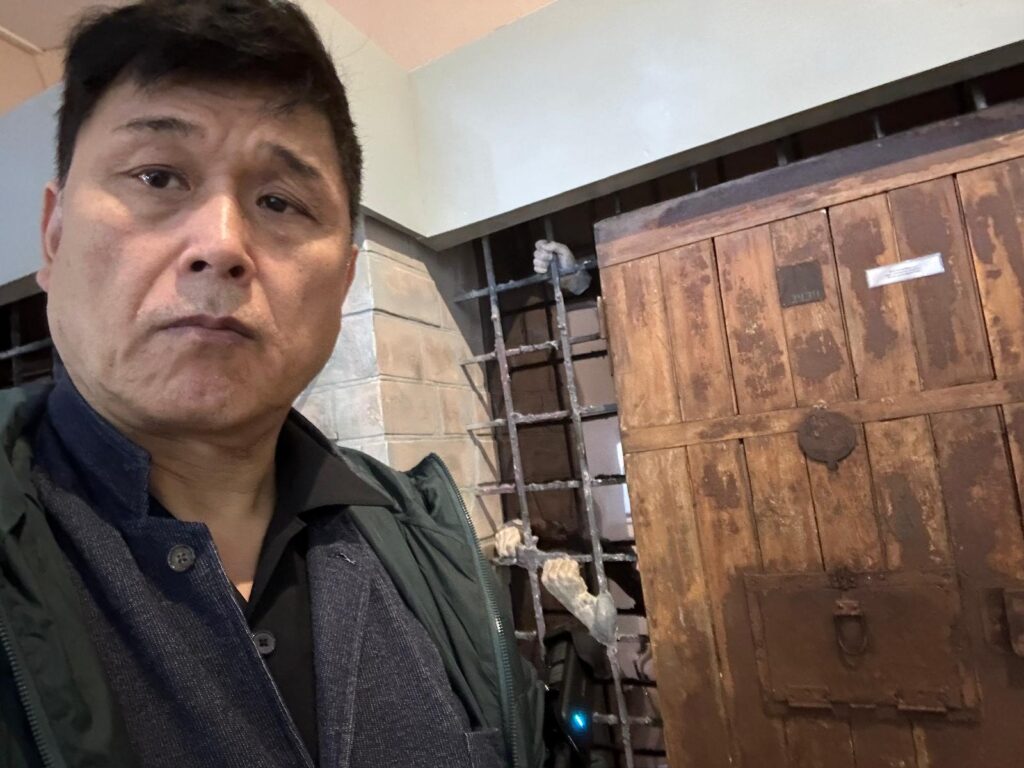
It is humanity itself.
The Rome Declaration is not the endpoint of a single conference. It is the beginning of a long effort to ensure that the technologies humanity has created are once again placed in the service of human dignity.
Should the dialogue begun in Rome grow beyond a one-time international gathering and develop into a Rome Process connecting science, education, religion, civil society, business, youth and the media, the 2026 Rome Declaration may come to be remembered as a point of origin for a new form of peacebuilding in the age of AI.
This article is brought to you by INPS Japan in collaboration with Soka Gakkai International in consultative status with UN ECOSOC. Katsuhiro Asagiri, as Director of the project titled, “Toward A World without Nuclear Weapons“, he covered the assembly together with his colleagues from Inter Press Service (Ariel F. Dumont) and London Post (Raza Syed).

INPS Japan
Related Articles:
Artificial Intelligence and the Future of Humanity: Nobel Laureates Call for Global Safeguards