




With instability around Iran exposing Japan’s dependence on Middle Eastern oil, Tokyo is deepening ties with Kazakhstan in search of more resilient supply chains, alternative energy routes and renewed cooperation on nuclear disarmament.
By Katsuhiro Asagiri
TOKYO (IPS) – As tensions surrounding Iran deepen and uncertainty spreads across global energy markets, Japan is once again confronting a structural weakness: its heavy dependence on Middle Eastern oil.|JAPANESE|
For decades, Japan has relied on crude imports from a region repeatedly shaken by war, confrontation and instability. With the stability of the Strait of Hormuz and surrounding waters once again under threat, Tokyo is accelerating efforts to diversify both supply sources and transport routes. In that process, Kazakhstan has emerged as an increasingly important partner.
Yet the strengthening relationship between Japan and Kazakhstan is not limited to oil, uranium or logistics. It also has a deeper historical and ethical dimension. Both countries carry the memory of nuclear suffering and have sought to transform that memory into a foundation for dialogue, cooperation and advocacy for peace.
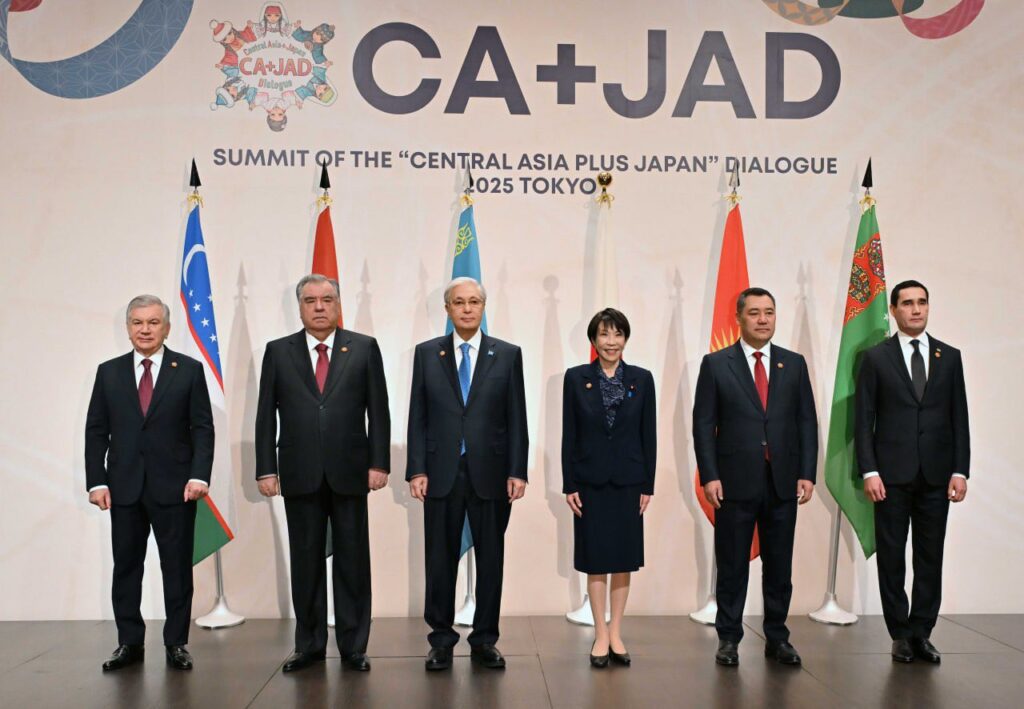
Japan’s growing interest in Central Asia was not triggered directly by the current Iran crisis. In December 2025, Japan hosted the “Central Asia plus Japan” summit in Tokyo and adopted the Tokyo Declaration. There, strengthening critical mineral supply chains and diversifying transport routes were set out as strategic priorities.
That framework has since taken on even greater urgency.
One important element is the Trans-Caspian International Transport Route, the so-called Middle Corridor. Connecting Central Asia and Europe without passing through Russia, this route has drawn attention as a new transport channel for energy and strategic goods. In an era shaped by war, sanctions, shipping disruptions and intensifying rivalry among major powers, such corridors have become increasingly important for Japan.
Kazakhstan stands at the center of this calculation.
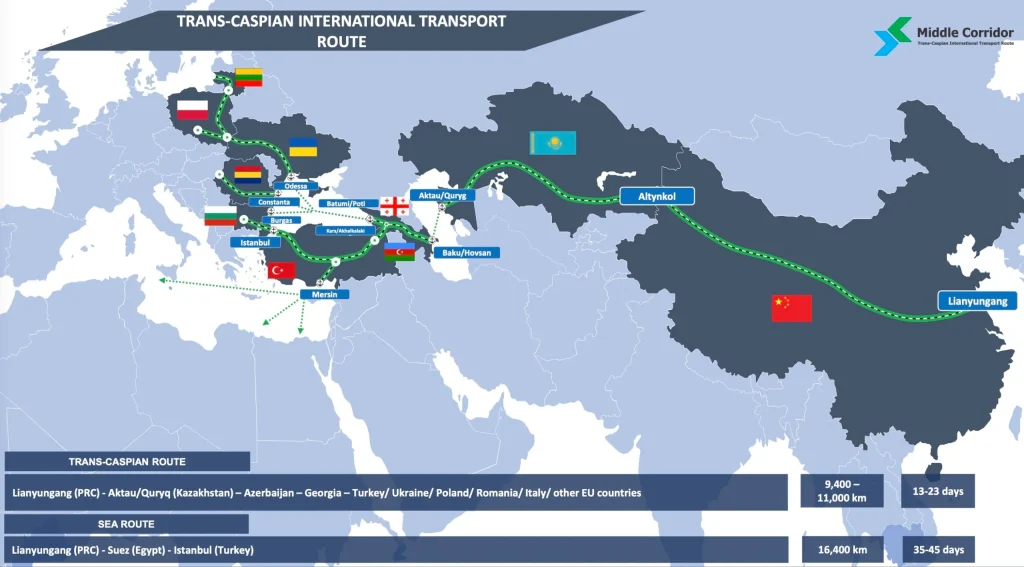
Japanese energy interests are already present in the Caspian region. INPEX, a Japanese company, holds stakes in major oil projects including Kazakhstan’s Kashagan field and Azerbaijan’s ACG field. Crude from these fields could serve as an alternative supply source to Middle Eastern oil for Japan. In addition, routes through the Caspian and Mediterranean can avoid the Strait of Hormuz, although that means longer transport times and higher shipping costs.
This reflects a shift in Japanese thinking. Diversification is no longer simply about finding new supplier countries. It is also about reducing the vulnerabilities embedded in the geography of trade itself.
Even so, energy alone cannot fully explain the distinctiveness of Japan-Kazakhstan ties.
What gives this relationship unusual depth is their shared historical experience of nuclear suffering. Kazakhstan endured the grave consequences of 456 nuclear tests conducted at the Semipalatinsk test site during the Soviet era. Japan remains the only country ever attacked with atomic bombs in wartime, and Hiroshima and Nagasaki continue to stand as enduring symbols of the catastrophic human cost of nuclear weapons.
The two histories are different. But the ethical language that emerged from them has much in common.
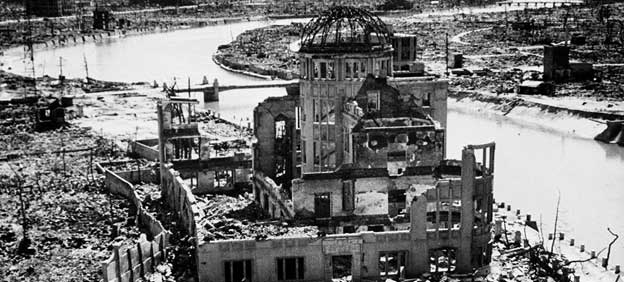
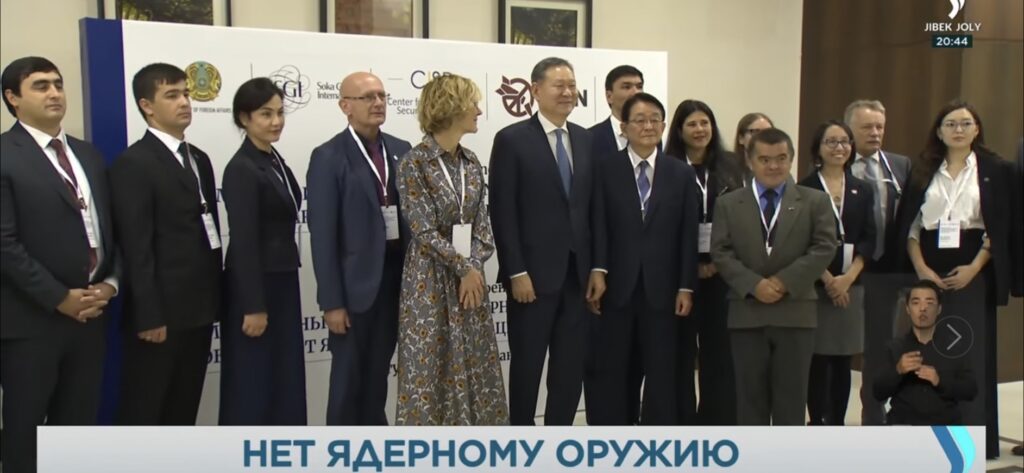
Over the years, Kazakhstan has worked with civil society actors, including the International Campaign to Abolish Nuclear Weapons (ICAN), Soka Gakkai International (SGI) and hibakusha, the survivors of Hiroshima and Nagasaki, to draw attention to the humanitarian consequences of nuclear weapons and nuclear testing. Through conferences, exhibitions and testimony, these experiences have continued to be made visible in international discourse. That is especially significant at a time when nuclear debates are often narrowed to deterrence theory and geopolitical rivalry.
What matters here is the “dialogue” dimension of Kazakhstan’s diplomacy.
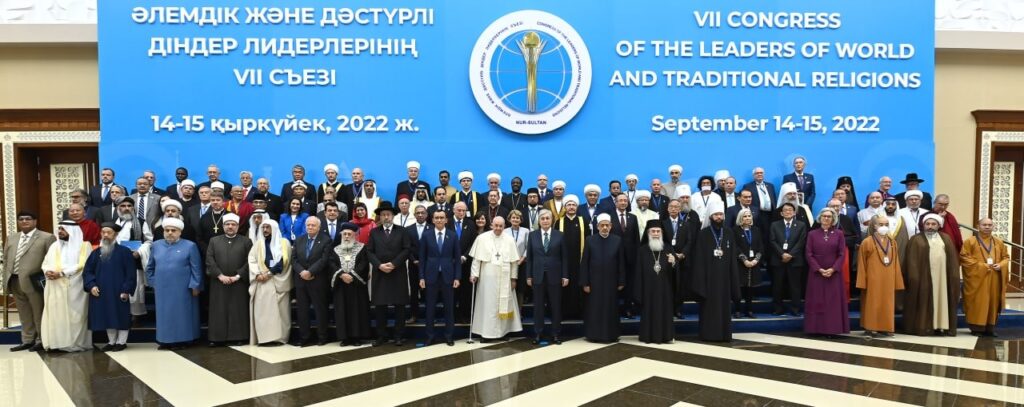
Through the Congress of Leaders of World and Traditional Religions, held in Astana since 2003, Kazakhstan has sought to position itself not merely as a supplier of resources or a transit country, but as a hub for dialogue across political, religious and civilizational divides. This initiative has become part of the country’s diplomatic identity, grounded in denuclearization, mediation and coexistence.
For Japan, this adds another layer to Kazakhstan’s significance. Kazakhstan is not only a country with oil, uranium and transport routes. It is also a state that has sought to transform its own history of suffering into diplomacy centered on peace, trust and human security.
This approach resonates with the realities of today’s world, where multiple crises overlap.
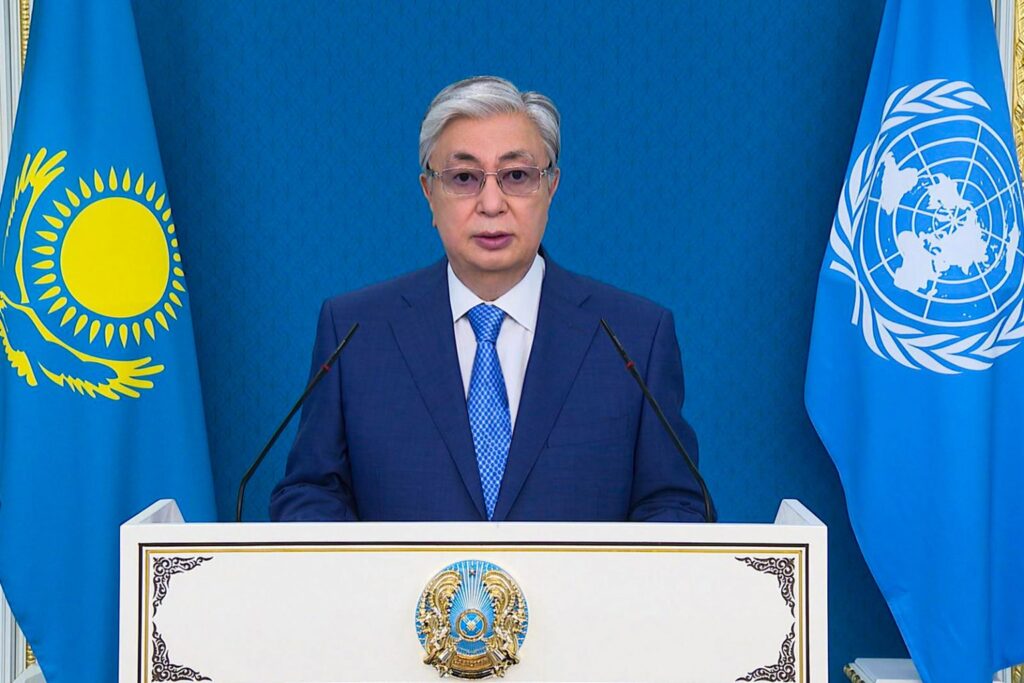
As Kazakh President Kassym-Jomart Tokayev has warned, nuclear risks are rising again. At the same time, energy insecurity, supply-chain fragility and geopolitical fragmentation are all intensifying. These are no longer separate policy issues. They are now deeply intertwined.
In this context, the relationship between Japan and Kazakhstan carries a broader lesson.
Cooperation between states does not have to be shaped only by economic and strategic interests. It can also incorporate shared memory, moral purpose and a commitment to dialogue. In practical terms, that means cooperation on energy and transport. Politically, it means contributing to a more stable and diversified regional order. Humanitarianly, it means sustaining the argument that security must not be separated from its human consequences.
Of course, this relationship is not free from limits or contradictions. Alternative routes are costly. State behavior is still heavily shaped by strategic calculation. Dialogue alone cannot neutralize the pressures of war.
Even so, in an international environment marked by fragmentation, coercion and renewed nuclear anxiety, the growing closeness between Japan and Kazakhstan means more than a tactical adjustment. It is also an attempt to connect realism with responsibility.
That is why this relationship deserves attention.
At a time when many countries are retreating into narrower and more inward-looking definitions of national interest, Japan and Kazakhstan are seeking to build a partnership that links resource security and diplomacy, memory and strategy, and national resilience with the search for peace.

INPS Japan