



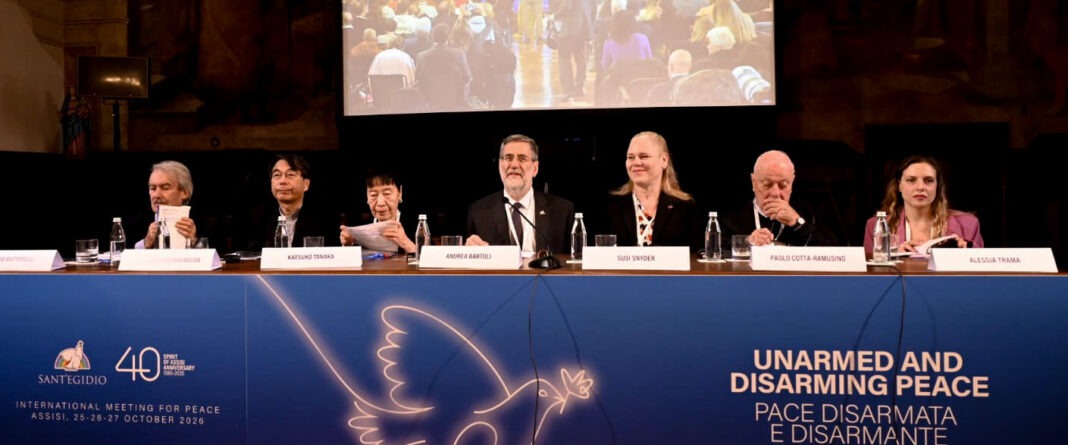

At an interfaith gathering in Assisi, nuclear survivors, scientists and religious leaders confronted a troubling question: Can humanity control the destructive powers it continues to create?
By Katsuhiro Asagiri

ASSISI, Italy (INPS Japan) — Eight decades after atomic bombs destroyed Hiroshima and Nagasaki, the world is confronting a new and potentially dangerous question: What happens when decisions involving human life increasingly pass from people to machines?
That concern ran through discussions at an international peace gathering in Assisi, where religious leaders, nuclear disarmament campaigners and technology specialists examined the risks of nuclear weapons and artificial intelligence — two very different technologies united by the possibility of catastrophic harm.|JAPANESE|
The meeting, organized by the Community of Sant’Egidio from Oct. 25 to 27, marked 40 years since Pope John Paul II brought representatives of the world’s major religions to Assisi to pray for peace.
This year’s theme, “Unarmed and Disarming Peace,” carried particular urgency. Nuclear arms control has weakened, military spending has reached record levels, and artificial intelligence is rapidly entering defense systems whose consequences remain difficult to predict.
The question was no longer simply whether humanity possessed the means to destroy itself. It was whether governments and societies retained the judgment to prevent those means from being used.
The Warning From Hiroshima
The human consequences of nuclear warfare formed the moral foundation of a forum devoted to disarmament and proliferation.
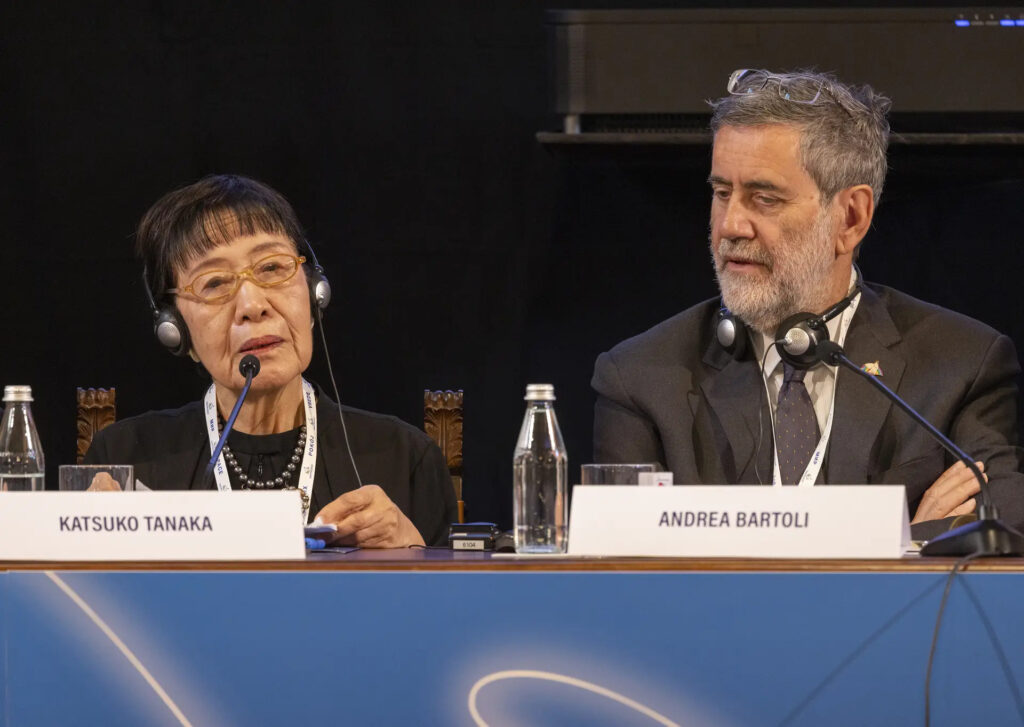
Katsuko Tanaka, also known as Toshiko Tanaka, a Hiroshima atomic bomb survivor, recalled the bombing of Aug. 6, 1945, when she was six years old.
Her account recalled a catastrophe that killed indiscriminately and left survivors carrying physical and psychological wounds for decades.
Archbishop Peter Michiaki Nakamura of Nagasaki, in his published remarks, drew on the legacy of Takashi Nagai, the physician and atomic bomb survivor who devoted his later life to peace.
Together, their perspectives challenged the language of nuclear deterrence, which measures security in terms of military capabilities rather than the lives potentially lost.
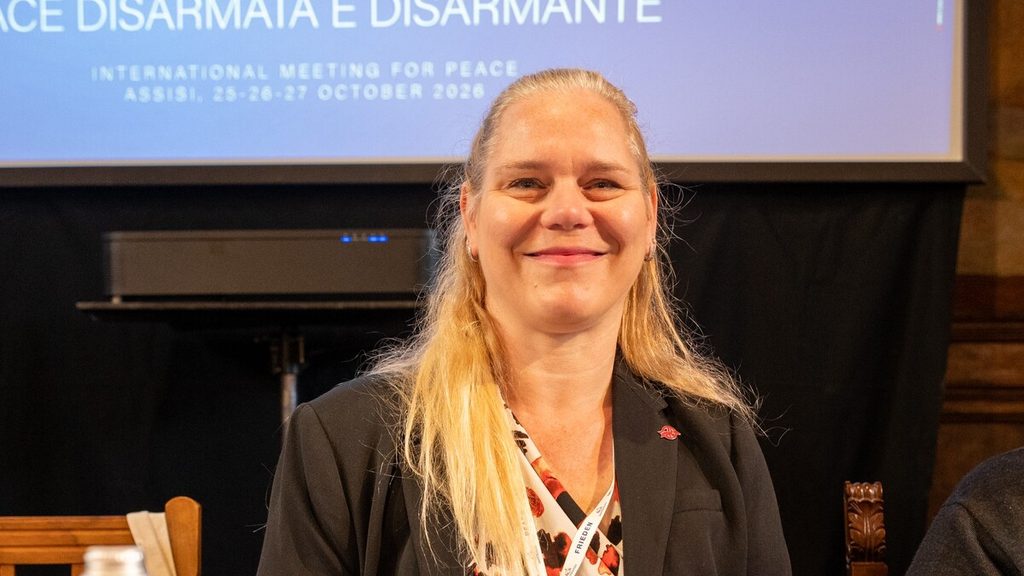
Susi Snyder of the International Campaign to Abolish Nuclear Weapons, or ICAN, addressed the growing danger posed by the modernization of nuclear arsenals and the erosion of arms control.
The expiration of the New START treaty between the United States and Russia in February, followed by the failure of the 2026 Nuclear Non-Proliferation Treaty Review Conference to reach consensus, has reinforced concerns about the future of nuclear restraint.
Attention is now turning to the first Review Conference of the Treaty on the Prohibition of Nuclear Weapons, scheduled to begin in late November.
But disarmament advocates face a persistent obstacle: The governments possessing nuclear weapons largely remain outside the treaty.
Teaching a Generation Without Memories of War
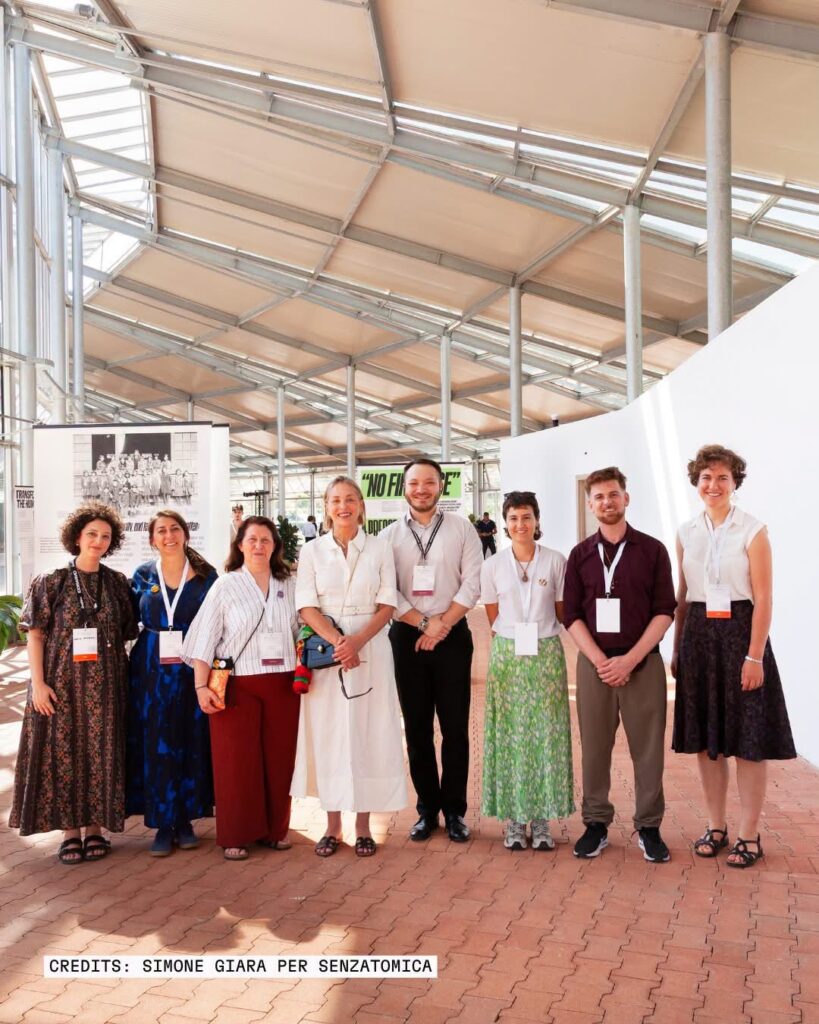
For the Italian Soka Gakkai, a Buddhist organization engaged in nuclear abolition campaigns, education has become an essential part of the response.
Alessja Trama, representing the Be The Hope Foundation, an organization affiliated with the Italian Soka Gakkai, described in her prepared remarks the work of Senzatomica, an initiative that has organized exhibitions and educational activities on nuclear weapons in communities across Italy.
The campaign traces its inspiration to a 1957 declaration by Josei Toda, the second president of the Soka Gakkai, calling for the abolition of nuclear weapons.
Its premise is that remembering Hiroshima and Nagasaki must lead to public responsibility, particularly among younger generations who have no personal connection to the war.
Yet even as campaigners seek to reduce the threat from existing weapons, advances in artificial intelligence are transforming the nature of military power.
When Human Judgment Becomes Optional
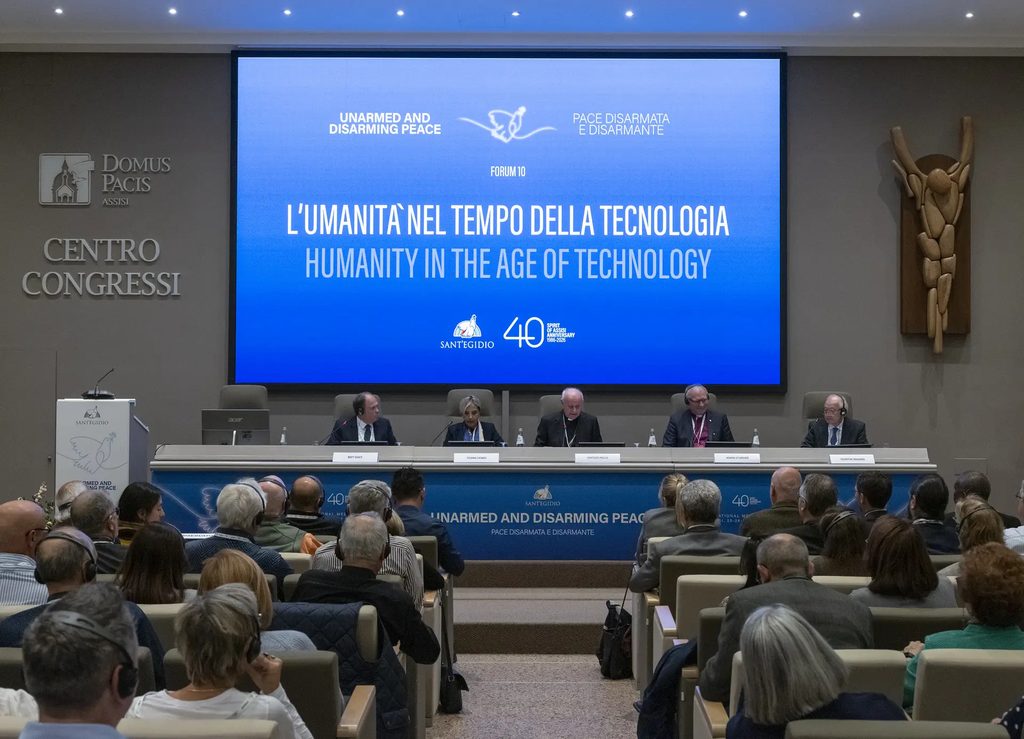
At a separate forum titled “Humanity in the Age of Technology,” Archbishop Vincenzo Paglia warned that technological capabilities were advancing faster than the institutions meant to govern them.
Tiziana Catarci, an Italian artificial intelligence researcher, raised a critical distinction: placing a human in a decision-making process does not necessarily mean that person exercises meaningful control.
An operator may formally approve a machine-generated recommendation without fully understanding how it was produced or being able to challenge it.
In military operations, that gap could become deadly.
Catarci called for stronger oversight of AI systems and the prohibition of autonomous weapons capable of making lethal decisions without meaningful human control.
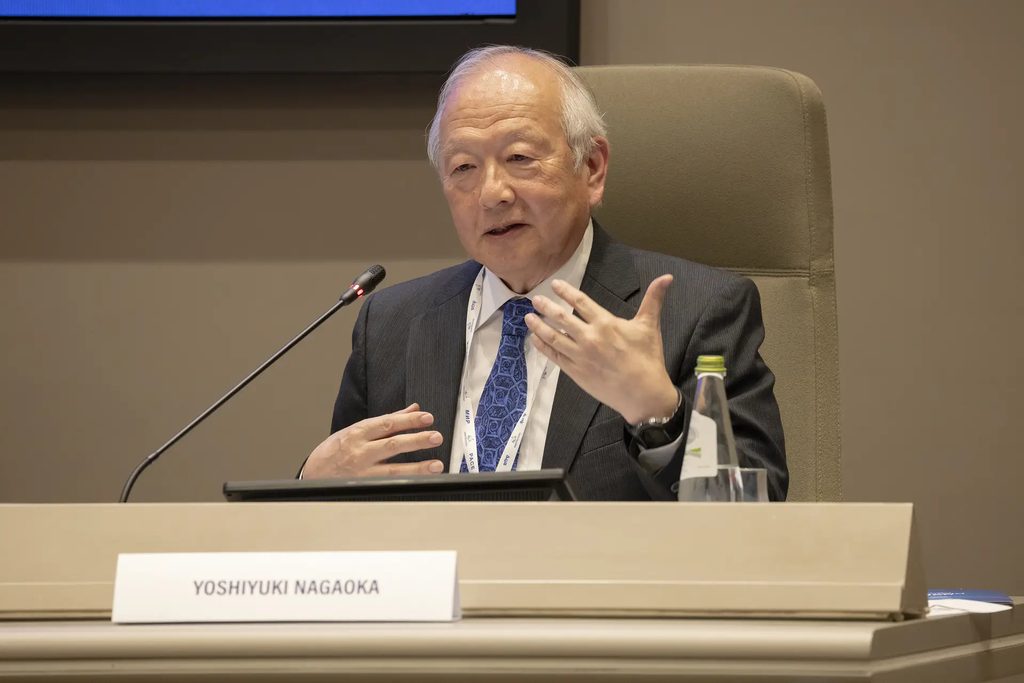
Yoshiyuki Nagaoka, executive director of the Office of Public Affairs of Soka Gakkai, approached the problem through Buddhist teachings on the dignity of life.
Nagaoka noted that AI is increasingly being embraced as a source of advice in everyday life in Japan, with some people turning to it for guidance when making deeply personal decisions about their lives.
One example he cited was the case of an elderly woman who turned to generative AI for advice about the medical treatment of her terminally ill husband.
For Nagaoka, the issue was not whether AI could provide useful information. It was whether reliance on such systems might gradually weaken the human willingness to make difficult moral judgments.
He warned particularly against delegating decisions about killing to autonomous weapons, advocating international rules to prohibit systems that independently select and attack human targets.
His argument extended beyond warfare to healthcare, where statistical predictions cannot replace compassion, personal choice and professional responsibility.
A Technology That Can Also Help
Other participants cautioned against viewing artificial intelligence solely as a threat.
Matt Vasey of the Gates Foundation argued that AI could improve access to healthcare, education and agricultural knowledge, especially in communities historically neglected by technological development.
But he also warned that people could voluntarily surrender moral responsibility to systems designed to make decisions easier.
Cisco executive Gianpaolo Barozzi emphasized the need to redesign work around human capabilities, while Rabbi Noam Marans of the American Jewish Committee distinguished the accumulation of information from the exercise of wisdom.
The speakers offered no single regulatory blueprint. They nevertheless returned repeatedly to the need for accountability, transparency and human judgment.
The gathering’s closing Peace Appeal connected these concerns to a broader agenda, urging that resources devoted to weapons be redirected toward food, water, education, healthcare and decent work.
It also identified nuclear threats, rearmament and artificial intelligence as challenges requiring international cooperation.

The message underscored a growing dilemma.
Humanity has developed technologies of extraordinary power. Yet the institutions and moral commitments needed to restrain their destructive uses have not necessarily kept pace.
From Hiroshima’s surviving witnesses to researchers confronting autonomous weapons, the warning emerging from Assisi was that security cannot be measured simply by what humanity is capable of building.
It must also be measured by what humanity is prepared to refuse.
INPS Japan
Related articles:
Activists Call on World to ‘Imagine’ Peace, End Nuclear Arms
From Castel Gandolfo to Campidoglio: Call for Human Dignity to Be at the Heart of the AI Revolution