

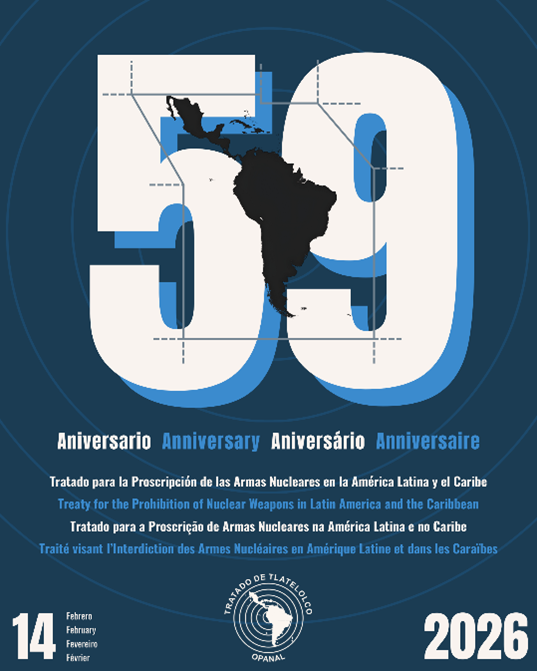

OPANAL member states demanded that nuclear weapons never be used again—by any actor, under any circumstances—warning that the world still has about 12,241 nuclear warheads.
By Guillermo Ayala Alanis
MEXICO CITY( INPS Japan) – The Treaty of Tlatelolco marks its 59th anniversary, reaffirming its purpose of keeping Latin America and the Caribbean a Nuclear-Weapon-Free Zone—despite the geopolitical tensions and armed conflicts currently shaking the world, which have led atomic scientists to set the Doomsday Clock at 85 seconds to nuclear catastrophe.|JAPANESE|SPANISH|
In a statement released on February 14, the 33 member states of the Agency for the Prohibition of Nuclear Weapons in Latin America and the Caribbean (OPANAL) expressed “great concern” over the current international situation and the ongoing realignment of the international order, warning that these dynamics are increasing the risk that nuclear-weapon states could resort to nuclear weapons.

OPANAL’s member countries demanded that nuclear weapons “never be used again—by any actor and under any circumstances,” underscoring that there are about 12,241 nuclear warheads worldwide, many of them maintained at a high operational alert.
María Cristina Rosas, who holds a PhD in International Relations and Latin American Studies from the National Autonomous University of Mexico (UNAM), said the Treaty of Tlatelolco can help the world reassert a fundamental point: nuclear weapons must not be treated as a supposed guarantor of survival in the international system.
“The day nuclear weapons are used—whether tactical or strategic—we will have crossed a threshold from which there is no return. It will be over… García Robles said it: the best way to promote international security is through disarmament,” she told INPS Japan.
hallenges for OPANAL’s New Secretary-General
With the recent appointment of Ambassador Juan Carlos Ortega Viglione as OPANAL’s Secretary-General, the organization faces several challenges—chief among them restoring nuclear disarmament to the center of the international agenda at a time when powers such as the United States and Russia have intensified rhetoric suggesting they could use weapons of mass destruction if they perceive their interests to be threatened.
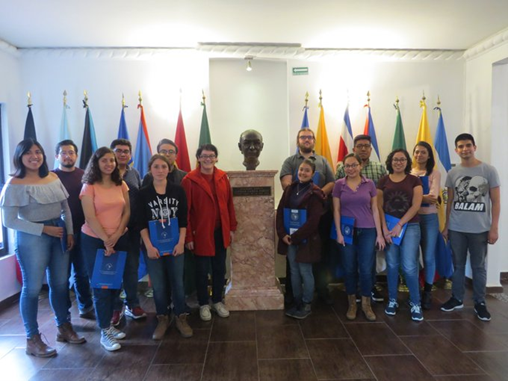
Washington and Moscow together possess roughly 90 percent of the world’s nuclear weapons, according to the International Campaign to Abolish Nuclear Weapons (ICAN).
Another major challenge for OPANAL is pressing nuclear-armed states to commit to—and comply with—negative security assurances: guarantees that nuclear-weapon states will not threaten or attack non-nuclear-weapon states with nuclear weapons. This matters even more, Rosas argued, when leaders such as Donald Trump have declined to rule out the use of nuclear weapons in response to what they consider threats to U.S. security and defense.
“It is important to challenge that logic and to make clear that the Latin American and Caribbean region does not threaten anyone with nuclear weapons—and therefore has no reason to be threatened,” Rosas, an expert on multilateralism and disarmament, said in an interview with INPS Japan.
Latin America as a Trump-Era Operational Hub
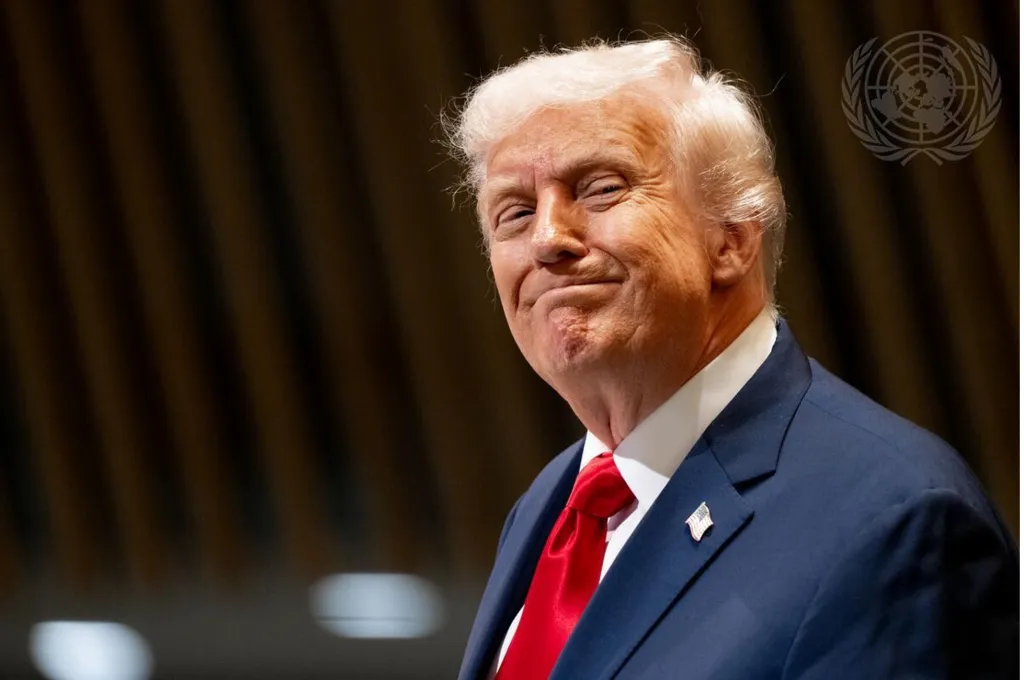
Rosas also pointed to Latin America and the Caribbean as a region where the United States has tightened its policies toward countries such as Colombia, Cuba, and Mexico, and—she noted—in more extreme cases has taken military action, including in Venezuela. In that context, she argued, Latin America and the Caribbean “became the Trump administration’s operational hub,” leveraged to secure benefits such as access to Venezuelan oil, gains linked to the Panama Canal, and advantages through partners such as Javier Milei’s Argentina—while weakening China’s presence in the region.
She added that the U.S. president has exploited the region’s lack of unity to advance his interests.
“The region is fragmented—we are stunned and unable to respond. Trump has been very effective in using tariffs as a threat: ‘If you don’t do what I want, I’ll impose tariffs,’ and he does impose them… He is skilled at dividing countries. We have to acknowledge that. He polarizes, divides, and threatens,” she said.
OPANAL, Multilateral Forums, and Upcoming Review Conferences
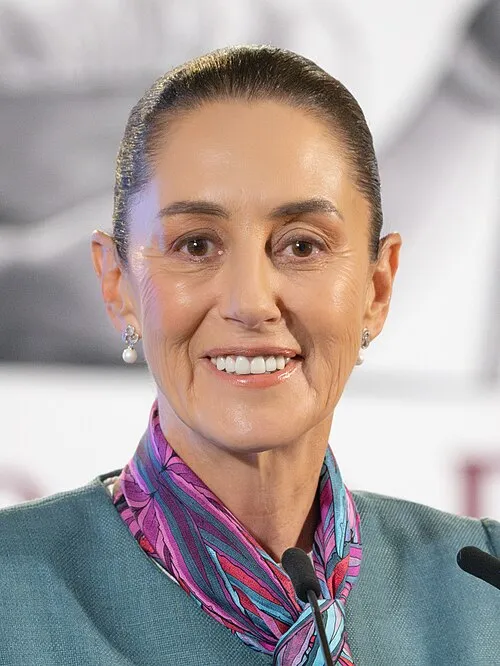
Regarding OPANAL’s engagement with multilateral bodies such as the United Nations, the agency plays a key role in promoting disarmament and supporting major diplomatic processes in 2026. These include the Eleventh NPT Review Conference, scheduled for April 27 to May 22, 2026, in New York, as well as the First Review Conference of the Treaty on the Prohibition of Nuclear Weapons (TPNW), set for November 30 to December 4, 2026, also in New York.
On the 59th anniversary of the Treaty of Tlatelolco, the Mexican government reiterated that the treaty is recognized worldwide as “a great step toward peace among peoples.” Mexican President Claudia Sheinbaum described the Treaty of Tlatelolco as one of the pillars of Mexico’s foreign policy and said the country would continue to play an active role in building peace globally.
After nearly six decades, the continued validity of—and commitment to—the Treaty of Tlatelolco demonstrates that eliminating nuclear arsenals is a feasible political choice, one that can be replicated elsewhere. It reinforces the idea that collective security is possible without weapons of mass destruction—an approach echoed by the world’s other Nuclear-Weapon-Free Zones and by Mongolia’s nuclear-weapon-free status.
This article is brought to you by INPS Japan in collaboration with Soka Gakkai International, in consultative status with the UN’s Economic and Social Council (ECOSOC).

INPS Japan