




By Raza Syed, Lolisanam Ulugova
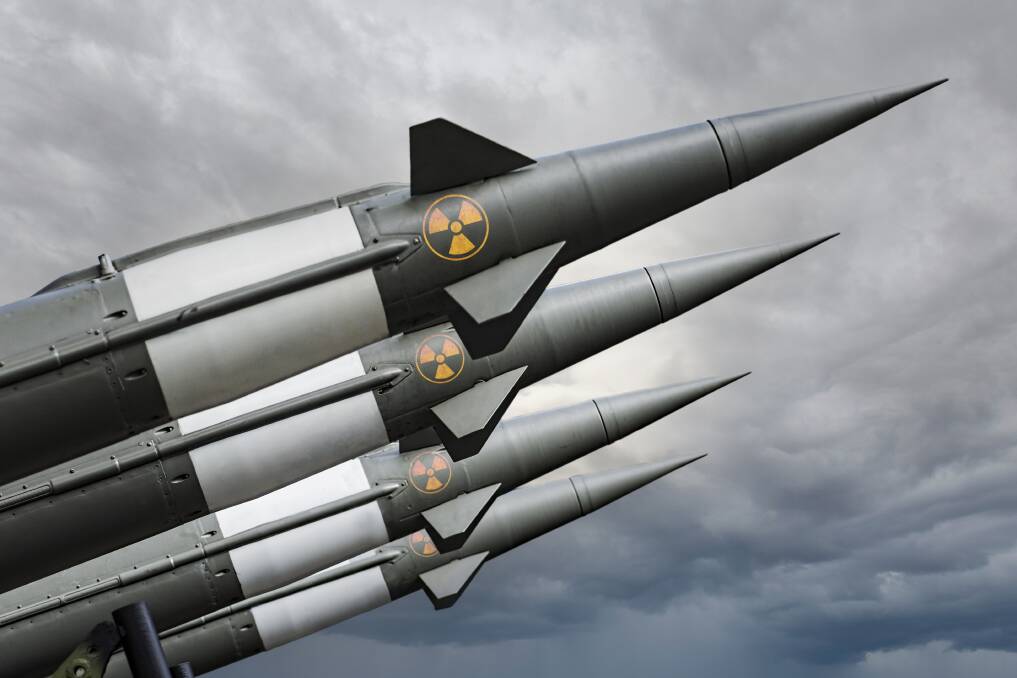
London (INPS Japan/ London Post) – The question of whether nuclear weapons are halal (permissible) or haram (forbidden) in Islam stands as one of the most profound ethical challenges of the modern age, where ancient religious principles confront a technology of ultimate destruction. This debate is not a mere academic exercise in applied theology; it is a sacred struggle over the soul of the Islamic tradition, waged in the corridors of power in Muslim-majority states and in the conscience of the global Ummah (Muslim community). The inquiry forces a direct reckoning: Can the foundational Islamic ethic of restraint, mercy, and inviolable life accommodate the logic of apocalyptic deterrence? The jurisprudential landscape reveals a critical, if uncomfortable, consensus: while a narrow argument exists for the possession of nuclear arms for defensive deterrence, the overwhelming weight of Islamic law, ethics, and scholarship declares any conceivable use of such weapons to be categorically impermissible and a grave transgression against divine command.|GERMAN|JAPANESE|
The Sacred Framework: Prohibiting Transgression and Protecting Life
To navigate this modern quandary, scholars return to the immutable sources of Islamic law—the Quran and the Sunnah (traditions of Prophet Muhammad, peace be upon him)—which establish an uncompromising ethic of warfare. This framework is anchored by the principles of distinction, proportionality, and necessity, designed to confine conflict and minimize human suffering.
The core command in the Quran is unequivocal: “Fight in God’s cause against those who fight you, but do not overstep the limits: God does not love those who overstep the limits” (Quran 2:190). The Arabic directive “la ta’tadu” (do not transgress) is interpreted as a comprehensive prohibition against initiating aggression, targeting non-combatants, and employing disproportionate force. This is operationalized in the Prophet’s explicit instruction to his armies: “Do not kill a decrepit old man, or a young infant, or a child, or a woman.” The sanctity of innocent life is elevated to a universal principle in the warning that killing one innocent person “is as if he had slain all mankind” (Quran 5:32).
These principles of restraint were institutionalized by the first Caliph, Abu Bakr, who commanded soldiers to avoid harming women, children, the elderly, monks, livestock, and even fruit-bearing trees. The objective of force is strictly military necessity, not wanton destruction. This ethical bedrock creates an immediate and severe tension with the nature of nuclear arms, whose blast, heat, and radioactive fallout are inherently indiscriminate, cannot distinguish between soldier and child, and cause generational environmental corruption (fasad fil-ard).
The Deterrence Argument: A Narrow Justification for Possession
In the face of this tension, how have some Muslim states and scholars justified the pursuit of nuclear capabilities? The primary theological anchor for proponents is a single Quranic verse: “Prepare against them whatever forces you [believers] can muster, including warhorses, to frighten the enemies of God and of yours” (Quran 8:60).
This verse is invoked to support the concept of deterrence (rad‘). From this perspective, acquiring formidable military strength—including, by modern extension, nuclear arsenals—to deter aggression and prevent a larger war is a permissible, even obligatory, act of communal self-preservation. The logic is strategic: a credible threat of retaliation secures peace and protects the sovereignty and security of the Muslim community. This view is often framed within the jurisprudential concepts of maslaha (public welfare) and darura (extreme necessity), arguing that in a world of nuclear-armed adversaries, possession is a tragic necessity to prevent a greater harm.
However, this permission is exceptionally narrow and is almost universally constrained by a critical caveat. The vast majority of scholars who entertain the deterrence argument simultaneously assert that the first use of nuclear weapons is absolutely haram. It constitutes an unprovoked aggression and a catastrophic violation of the prohibition against transgression. The gray zone, therefore, exists only in the possession of weapons intended solely to deter, with their actual use remaining beyond the pale of Islamic permissibility.
The Prohibition Argument: The Insurmountable Ethical Barrier
The more formidable and dominant scholarly position holds that nuclear weapons are intrinsically incompatible with Islamic law due to their indiscriminate and disproportionate nature. This argument moves beyond the specifics of intent to the weapon’s inherent characteristics, which violate core Islamic prohibitions.
The central objection is that nuclear weapons cannot, by their design, comply with the Islamic law of distinction. They obliterate the fundamental line between combatant and non-combatant, guilty and innocent. Their long-term effects—radiation poisoning, genetic damage, and environmental devastation—constitute a form of corruption on earth that harms future generations, directly contravening the Quranic injunction against spreading mischief (Quran 2:205). The principle of proportionality is rendered meaningless; a nuclear response to any attack would almost certainly constitute a disproportionate “overstepping of the limits,” forbidden by Quran 16:126 and 2:190.
Consequently, a powerful consensus has emerged among contemporary Islamic scholarly bodies. Institutions like the International Islamic Fiqh Academy of the Organization of Islamic Cooperation (OIC) and leading authorities such as Egypt’s Al-Azhar have issued declarations stating that Weapons of Mass Destruction (WMDs), including nuclear arms, are forbidden. They argue these weapons “are evil in themselves” and their use “constitutes a crime against humanity,” irreconcilable with Islam’s humanitarian ethos and the higher objectives of Sharia (maqasid al-shari’ah), which prioritize the preservation of life, religion, and intellect.
Case Studies in Contradiction: The Fatwa and the “Islamic Bomb”
The tension between these theological positions is vividly illustrated in the policies of two Muslim-majority nuclear states: Iran and Pakistan.
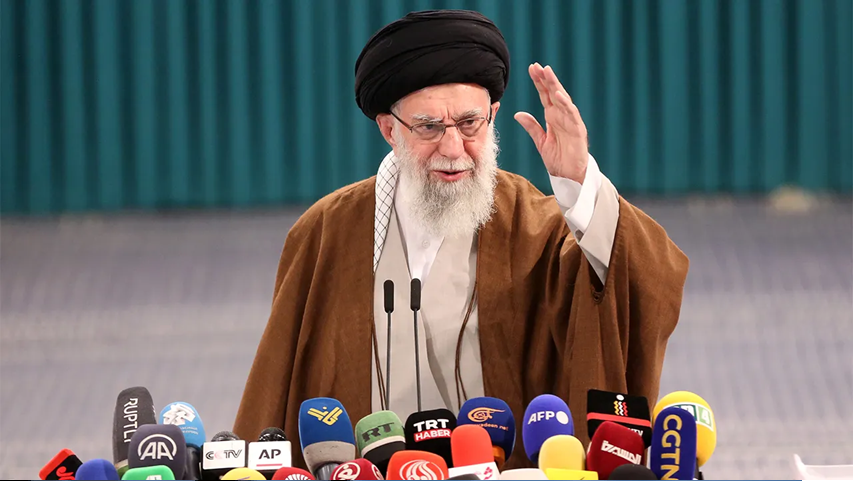
Iran’s Strategic Fatwa: For two decades, Iranian diplomacy has been framed by a fatwa (religious ruling) attributed to Supreme Leader Ayatollah Ali Khamenei, declaring nuclear weapons “haram.” This ruling is presented as a binding, faith-based prohibition that guides state policy. A closer examination, however, reveals a calculated ambiguity typical of strategic statecraft. The public fatwa explicitly forbids the “production, stockpiling, and use” of nuclear weapons. Yet, critics and analysts note that the clerical and political discourse within Iran often focuses narrowly on the sin of use, while being deliberately vague on the technological threshold of “production.” This ambiguity was starkly highlighted in 2021 by then-Intelligence Minister Mahmoud Alavi, who stated, “The Supreme Leader has said… nuclear weapons are against sharia law… But a cornered cat may behave differently.” Thus, Iran’s position exemplifies how a religious-ethical argument can serve as both a genuine moral stance and a flexible instrument of geopolitical strategy, leaving a deliberate gray zone between prohibition and existential readiness.
Pakistan’s Doctrine of “Islamic Deterrence”: In contrast, Pakistan, the only Muslim-majority state with declared nuclear weapons, represents the deterrence argument in practice. Faced with a nuclear-armed India, Pakistan’s program has been framed by some domestic voices as a necessary “Islamic bomb” for the defense of the Ummah. Its justification rests squarely on the principles of darura (necessity) and the Quranic command to “prepare power” (8:60). Pakistani strategists argue that their nuclear arsenal is purely for defensive deterrence, with a declared no-first-use policy aligning (in theory) with the Islamic prohibition on initiating aggression. This case demonstrates how national security imperatives can dominate the ethical discourse, legitimizing possession through a selective application of jurisprudential principles, even as the terrifying destructive power of the weapons themselves continues to provoke profound ethical unease among many Islamic scholars globally.
Conclusion: An Imperative for Ethical Leadership and Disarmament
The Islamic debate on nuclear weapons does not yield a simplistic verdict. It presents a graduated and deeply troubled ruling: a contingent, heavily debated, and politically fraught allowance for possession as a deterrent, existing in permanent tension with a near-absolute theological and ethical prohibition on use. This creates a morally precarious position—a security doctrine reliant on the threat of an act considered religiously abhorrent.
The ethical trajectory within global Islamic discourse, however, is bending decisively toward prohibition and disarmament. From the formal rulings of major scholarly academies to the multi-faith declarations at the United Nations, there is a growing recognition that the logic of nuclear deterrence is fundamentally at odds with the imperative to “safeguard future generations” and uphold the sanctity of God’s creation. The ultimate challenge for Muslim scholars, intellectuals, and political leaders is to deepen this ethical conversation, moving it beyond the pragmatics of strategic posturing. The true task is to affirm a clear, principled stance rooted in the core of the faith: that genuine security for the Ummah and for all humanity lies not in the balance of nuclear terror, but in the courageous, faithful, and urgent pursuit of peace, justice, and total disarmament.
Note:This article is produced to you by London Post, in collaboration with INPS Japan and Soka Gakkai International, in consultative status with UN ECOSOC.
INPS Japan