



By Ahmed Fathi
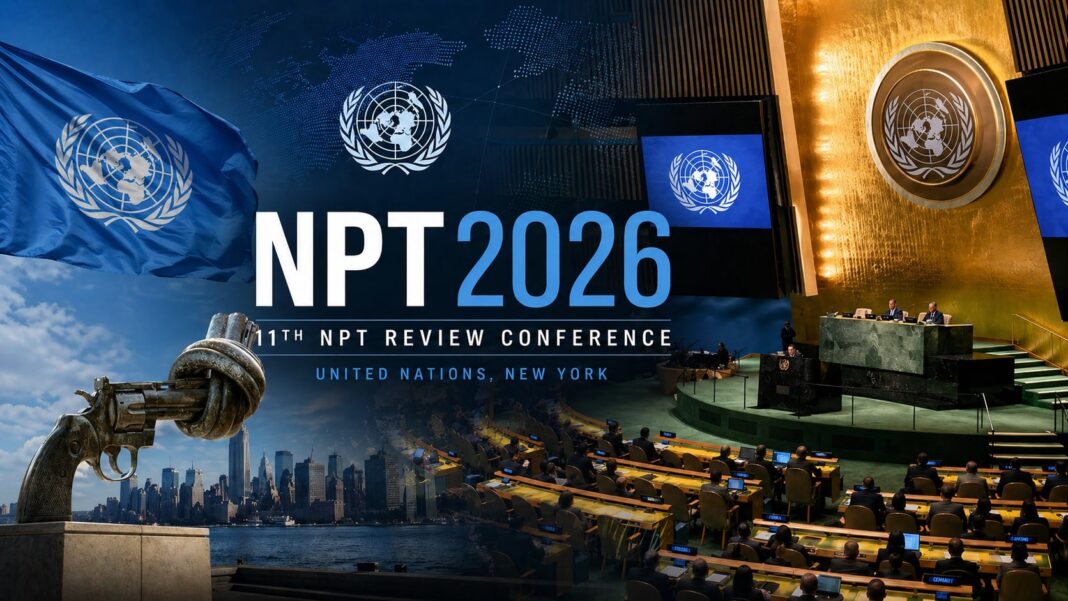
UNHQ, New York (INPS Japan/ATN) – The world’s central nuclear bargain returns to the United Nations this week, carrying the weight of old promises, new wars, and one uncomfortable question: Does the Treaty on the Non-Proliferation of Nuclear Weapons (NPT) still convince states that restraint is safer than the bomb?
The 11th NPT Review Conference opens at U.N. headquarters with all three pillars of the treaty under strain: nuclear disarmament, non-proliferation, and the peaceful use of nuclear energy. What was once diplomatic architecture now feels like a pressure chamber. Arms control is weakening. Nuclear rhetoric is rising. Facilities built for peaceful purposes are increasingly discussed in the language of war. And new technologies, including nuclear naval propulsion, are testing rules written for an earlier age.

For U.N. Disarmament officials, the stakes are no longer theoretical. Izumi Nakamitsu, the U.N. High Representative for Disarmament Affairs, has warned that the treaty faces a serious credibility test as nuclear risks rise and confidence between nuclear and non-nuclear states continues to erode.
Beyond the treaty’s formal membership, that concern resonates.

In a response to ATN News, Ambassador Munir Akram, Pakistan’s former Permanent Representative to the United Nations, said the
The NPT regime is facing an “existential challenge,” citing stalled nuclear disarmament, double standards over India and Israel, and the growing belief that nuclear weapons provide protection from external aggression.
Akram’s warning is significant as an external strategic assessment, but it necessitates contextualization. Pakistan, like India and Israel, is not a party to the NPT. His critique reflects the view from outside the treaty system: that the regime’s credibility has been weakened not only by the actions of treaty members, but also by the exceptions and silences surrounding states that remain beyond its framework.
His argument goes to the treaty’s darkest political problem. If states conclude that nuclear weapons deter attack more effectively than treaty commitments protect restraint, the NPT’s logic begins to fracture.
However, the conference will not commence solely in the face of failure. Kazakhstan is pressing for a more balanced picture.

Ambassador Kairat Umarov, Kazakhstan’s Permanent Representative to the United Nations and a vice president of the 11th NPT Review Conference, told ATN News that the debate should also reflect constructive elements, especially under the non-proliferation pillar.
“Nuclear-weapon-free zones remain one of the most practical and effective examples of how non-proliferation commitments are implemented at the regional level,” Umarov said, pointing to the 20th anniversary of the Central Asian Nuclear-Weapon-Free Zone as “a concrete illustration of how the NPT continues to deliver tangible results.”
For Kazakhstan, that example is not abstract. The Central Asian zone is tied to Semipalatinsk, the former Soviet nuclear test site, and to a national history shaped by the human cost of nuclear testing. Its message to the conference is clear: the treaty is under pressure, but there is evidence of its success.
Still, several live disputes will test how far that optimism can carry.
One is the growing danger around nuclear facilities in conflict zones. Attacks on or near nuclear sites, including facilities under safeguards, have sharpened concerns over whether peaceful nuclear infrastructure can remain protected when wars expand and military logic takes over. A treaty built around peaceful nuclear energy faces a brutal test when nuclear facilities themselves become targets, pressure points, or battlefield risks.
Another is nuclear naval propulsion. The AUKUS submarine arrangement, under which Australia is expected to acquire nuclear-powered submarines with support from the United States and Britain, has opened a major safeguards debate. The dispute is not over Australia acquiring nuclear weapons; Canberra says the submarines will be conventionally armed. The argument is over precedent, transparency, and whether naval propulsion could stretch the NPT in ways others may later exploit. For China, AUKUS raises proliferation concerns. For Australia, it is a safeguarded defense program. It is an uncomfortable test case with a long fuse for the NPT.
But the Middle East remains the treaty’s most politically sensitive unfinished business.
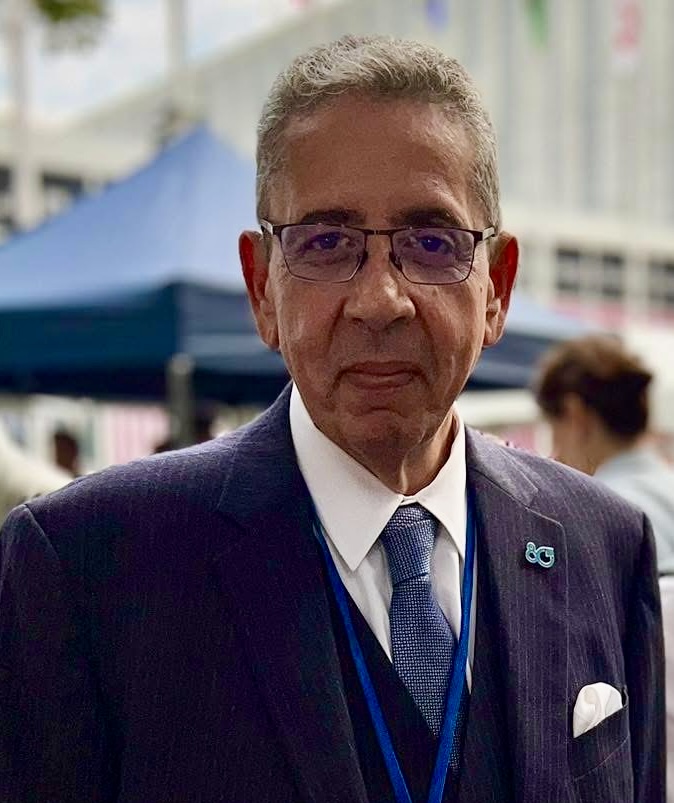
In a conversation with ATN News, Ambassador Maged Abdelfattah, Permanent Observer of the League of Arab States to the United Nations, said the Arab position entering the review conference should not be reduced to Iran alone. He framed the Arab approach around all three NPT pillars: disarmament, non-proliferation, and peaceful uses of nuclear energy.

For Arab states, the central unresolved issue remains the 1995 Middle East resolution, adopted as part of the political bargain that allowed the NPT to be extended indefinitely. That resolution committed support for establishing a Middle East zone free of nuclear weapons. Three decades later, Arab diplomats argue that the promise remains unfulfilled.
Abdelfattah described the U.N.-mandated conference process launched in 2019 to establish a Middle East zone free of nuclear weapons and other weapons of mass destruction as rooted in the NPT’s history, with the 1995 resolution as the core reference point.
That Arab argument has also drawn support from Moscow, one of the original co-sponsors of the 1995 resolution alongside the United States and the United Kingdom.

Asked by ATN News about the Middle East WMD-free zone, Ambassador Vassily Nebenzia, Russia’s permanent representative to the United Nations, said Moscow attaches “great importance” to establishing such a zone and views it as one of its foreign policy priorities in nuclear non-proliferation.
Nebenzia said the deteriorating security situation in the region has made the creation of such a zone “more pertinent than ever” and linked the issue directly to the NPT’s 1995 bargain. He said the Middle East resolution, co-sponsored by Russia, the United States, and the United Kingdom, helped allow the treaty to be extended indefinitely and without a vote. Russia, he said, proceeds from the understanding that the resolution “remains valid until its objectives are achieved.”
Nebenzia said Russia has participated as an observer in all six sessions of the U.N. conference on establishing a Middle East WMD-free zone and regards the forum as a platform for dialogue and confidence-building among regional states. He also expressed regret that Israel and the United States have stayed away from the process, while saying practical progress would be impossible without Israel.
That leaves the conference facing two competing truths. The NPT remains the foundation of the global non-proliferation system and has produced real achievements, including regional nuclear-weapon-free zones. However, stalled disarmament, regional double standards, attacks on nuclear facilities, nuclear modernization, and new technologies that strain existing safeguards are testing its legitimacy.
The NPT is not dead. Treaties of this kind usually dissolve gradually. They erode when promises become ceremonial, when exceptions become permanent, and when states begin to believe that compliance offers less protection than power.
That is the real test in New York. The danger is not only another failed outcome document. The greater danger is that more states begin to ask whether the nuclear bargain protects restraint or merely preserves privilege.
This article is brought to you with permission from American Television Network.
Original URL:https://www.amerinews.tv/posts/npt-credibility-on-the-line-as-nakamitsu-warns-nuclear-treaty-faces-critical-test

INPS Japan